House of Noya: Memory, Inheritance, and the Fragrances That Bring People Closer
Written by Ally Santos
I first spoke with Talha Kalsekar over Zoom, what he describes as “a conversation of personal history.” We had already crossed paths briefly at ScentXplore, where House of Noya stood among the participating brands, but this was the first time I understood the depth behind it.

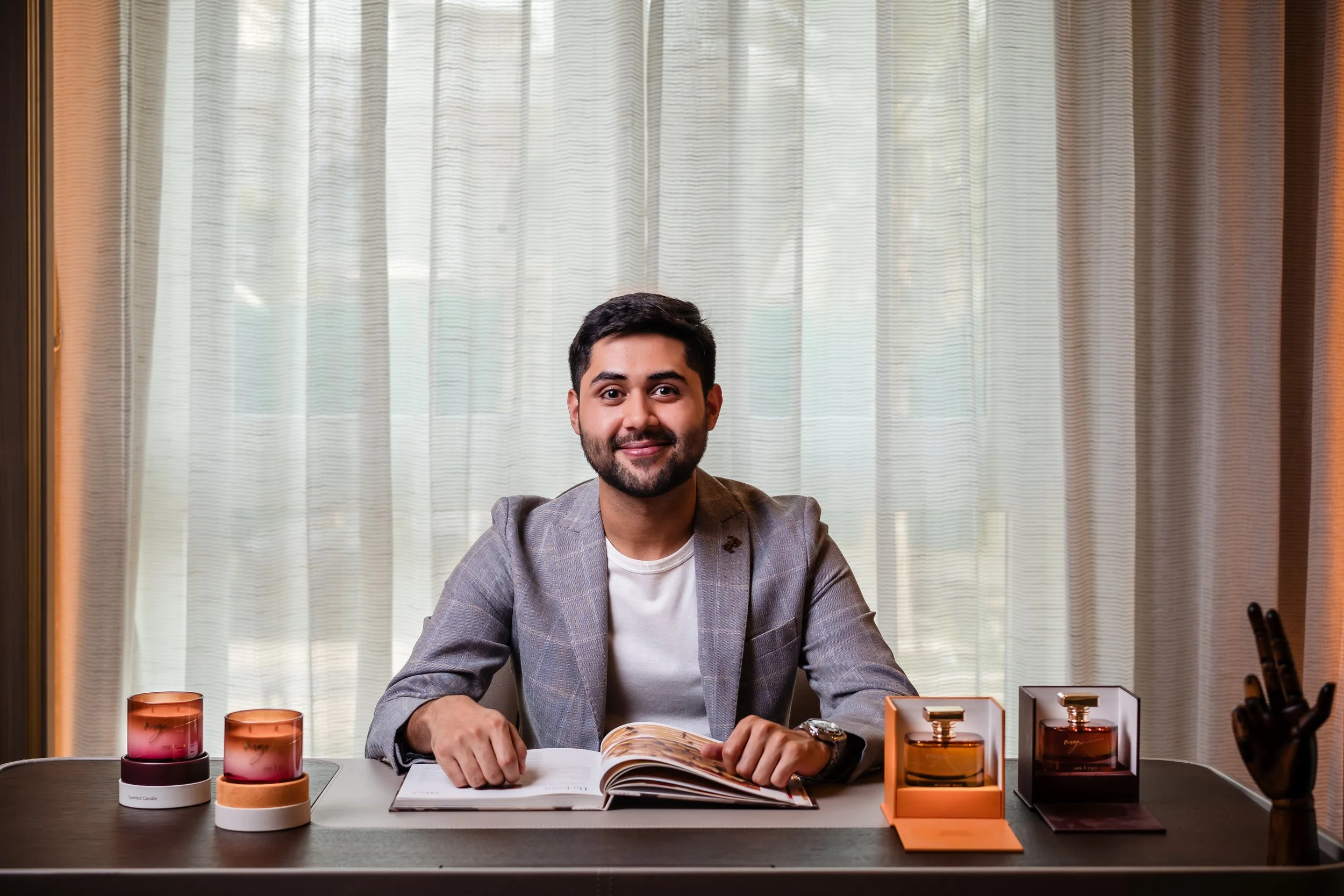
Talha Kalsekar / Images from the brand’s archive
Some brands are built with strategy at the forefront. Others are shaped by legacy. House of Noya exists somewhere in that in-between space, where inheritance meets intention.
Growing Up in Scent
For Talha, fragrance was never something abstract. “It was always part of daily life,” he says.
He grew up in a home where multiple generations lived together, where his grandfather and six sons shared not just space, but a business rooted in scent. Conversations around the dinner table weren’t casual. They revolved around raw materials, blends, and decisions. “It was immersive, constant,” he remembers, “and for a long time, something I wasn’t sure I wanted to claim as my own.”
So he stepped away.
Like many who grow up close to a family trade, he moved in the opposite direction. There was a period where Formula One felt like the dream, “I was drawn to the speed and precision,” he says. That interest evolved into cars and engineering, and eventually into food. Cooking became both an outlet and a quiet form of independence, “a way to create something that belonged solely to me,” he explains.

Then 2015 shifted everything.
The passing of his grandfather didn’t just mark a personal loss, it left a visible gap in the family business. Without its patriarch, direction became uncertain. “It was one of those times where everything just kind of stops,” he says, “and you’re left sitting there asking yourself… what now?”
Distance and Rediscovery
London offered distance. He moved there to study international marketing, with a focus on consumer behavior, and for the first time, he had space to observe the world and himself from the outside. Travel became more intentional. Food remained a constant, “it grounded me while everything else felt in transition,” he says.
And then, unexpectedly, fragrance reappeared.
At an event hosted by Memo Paris at Harvey Nichols, he listened to John Molloy speak about the brand. What stayed with him wasn’t just the compositions, but the philosophy. “It changed how I saw fragrance,” he says. Memo built its identity around travel, memory, and lived experience. It reframed perfume as something deeply personal rather than purely commercial.
That idea stayed with him.
Fragrance, for the first time, felt like a language rather than an obligation.
By 2016, as niche perfumery continued to open up globally, he began exploring it on his own terms. Certain scents marked moments؛ Irish Leather being one of them, not just as something he wore, but something he connected to.
When he returned to the UAE in 2019, it was without pressure. There was no expectation to immediately step into the family business. Instead, he allowed himself to move slower. To travel, to observe, to pay attention.
Then came the stillness of the pandemic.
Like it did for many, it forced a pause. During that time, an internship in the fragrance space quietly brought him back to where he started; but with a different perspective. This time, it wasn’t about continuation. It was about creation.
Building House of Noya
House of Noya began from that place.
At its core is a simple but considered idea: that everyone carries something meaningful within them. Talha refers to it as “divine beauty,” not in an abstract sense, but as something deeply human. Fragrance becomes the medium through which those internal stories are expressed.
“The idea was never to create just another perfume brand,” Talha shared. “It had to mean something. It had to reflect people; their emotions, their memories, the things that stay with them.”
It builds around emotion, memory, and shared experiences. Moments that feel familiar, regardless of where you’re from.
When House of Noya launched in 2021 with the Prima Collezione, it introduced nine fragrances that don’t follow a single narrative, but instead exist as individual stories.
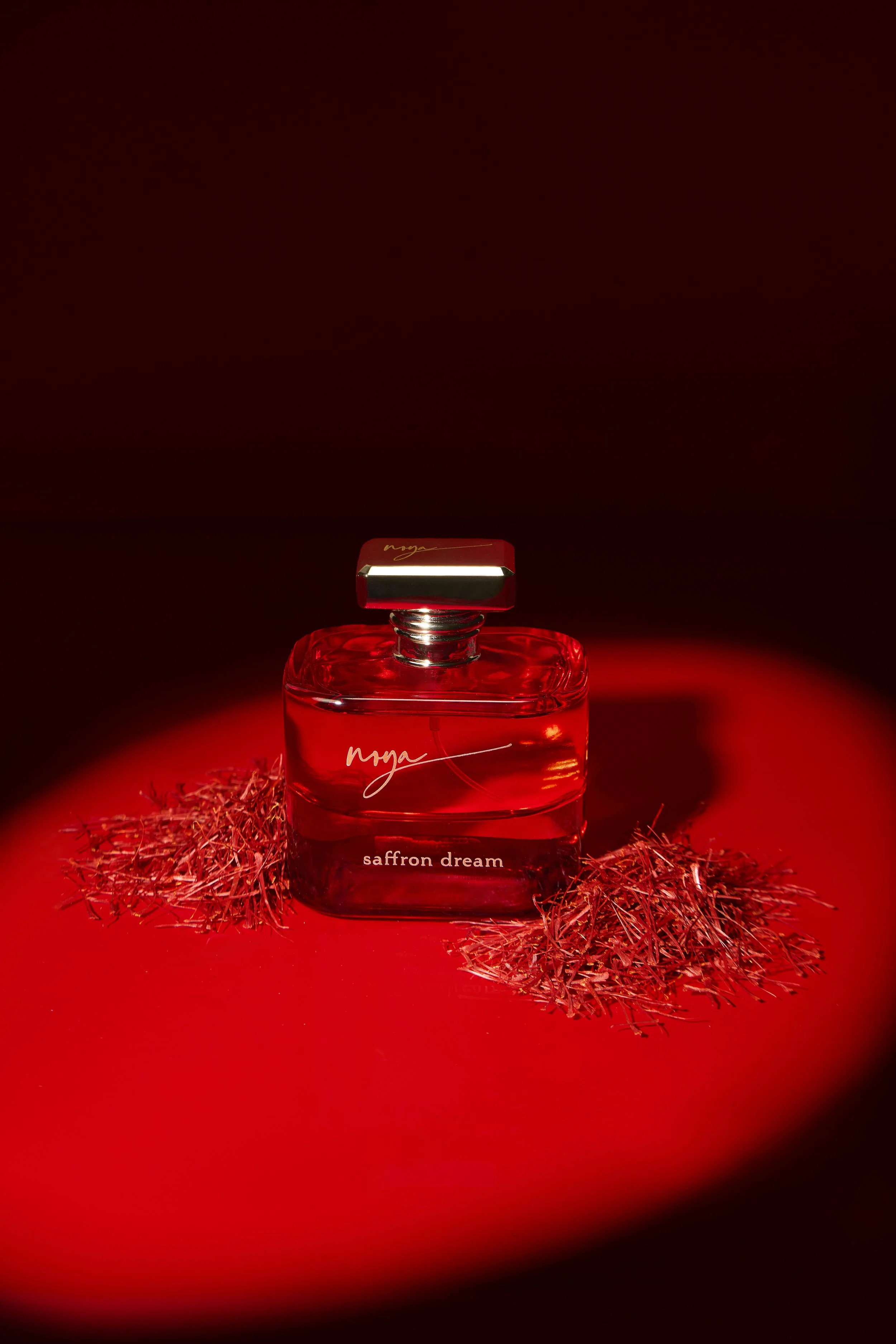
Saffron Dream is one of the most personal.
“That one is very close to me,” he said. “It’s about leaving home, about growing up and going out into the world, but still carrying your mother with you. Saffron is something so familiar to us, to me and so I wanted that warmth to stay at the center of the story.”
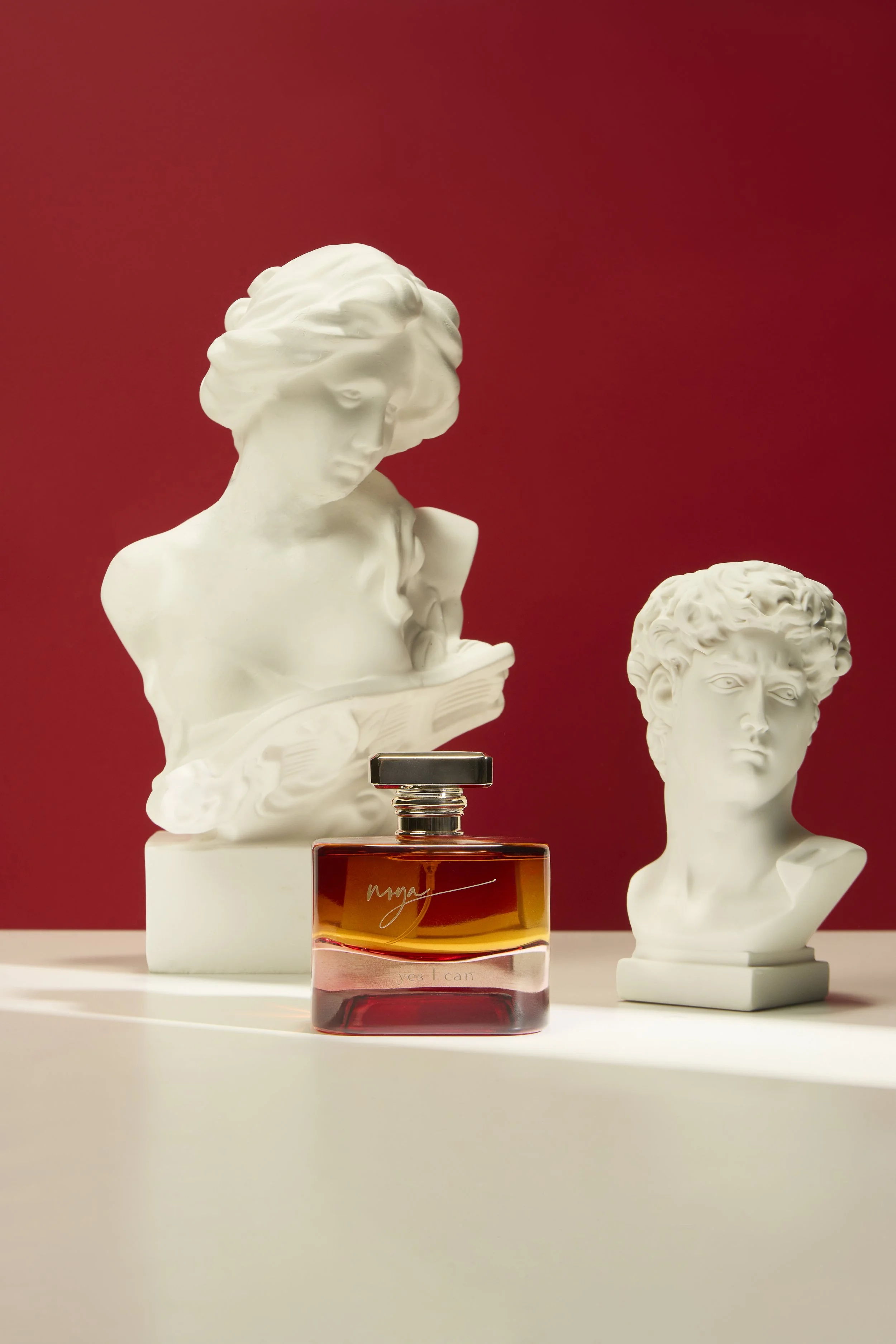
Yes I Can carries a different kind of intimacy.
“It’s dedicated to my wife,” Talha explained. “She became the first physician in her family, and I wanted to capture that strength. Something that feels steady, an anchor.
Other fragrances move into shared, collective moments.
“Midnight Melody is about New Year’s Eve,” he said. “That feeling when everything is about to change. There’s excitement, there’s energy, but also reflection.”
“Winter Sun comes from Holi,” he continued. “It’s a celebration that goes beyond one place. It’s about color, joy, people coming together. I wanted that sense of connection to come through.”
Some of these compositions were developed with perfumers like Dominique Ropion, grounding the emotional direction in technical precision.
Expanding the Story
More recently, the Aqua Collection expands the narrative through travel.
“With Aqua, I wanted to translate places into feelings,” he said. “Not just what you see, but what you feel when you’re there.”
Citrus Coast stands out in its simplicity.
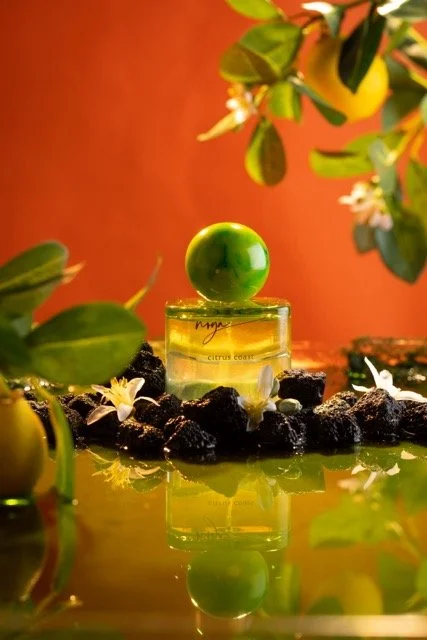
“That one came from a trip to Cinque Terre,” he shared. “I was watching the sunset with a childhood friend. It was one of those moments where everything feels easy. You’re not thinking about anything else. You’re just there. I wanted to hold onto that.”
The story continues to evolve. A forthcoming release with Jordi Fernández is expected to explore Asian influences, introducing a new layer to the brand’s perspective.
“I’ve been spending more time in Asia,” he said. “There’s a different energy, a different way of experiencing things. I want to translate that into something fresh, something that still feels like us but brings in a new perspective.”
And yet, even with all this forward movement, everything still traces back to where it began.
The quiet imprints of memory throughout. His father’s affinity for Cartier perfume. His mother’s connection to Dior fragrance and Flower by Kenzo. His grandfather blending oud oils by hand.
“All of those memories stay with you,” Talha said. “Even if you try to move away from it, it becomes part of how you see and create things later on.”
House of Noya feels less like a departure from his past and more like a reconciliation with it.
Looking ahead, Talha speaks about building something that can represent the UAE on a global stage, standing alongside established houses like Amouage. But beyond positioning, there’s a more personal ambition at play.
“I want people to feel something when they wear it,” he said. “If they can connect to it, even in a small way, then that’s enough.”
Because in the end, House of Noya was never built to simply be worn.
It was built to stay with you.