Beyond Intensity: Patrice Revillard on Texture, Subtlety, and Scent Memory
Written by Kristina Kybartaite-Damule
Perfume is often described as invisible art — but behind it are very real, deeply personal stories. For perfumer Patrice Revillard, creation is not just about scent, but about texture, memory, and emotion. In this interview for PlezuroMag, he opens up about his journey, inspirations, and creative philosophy.
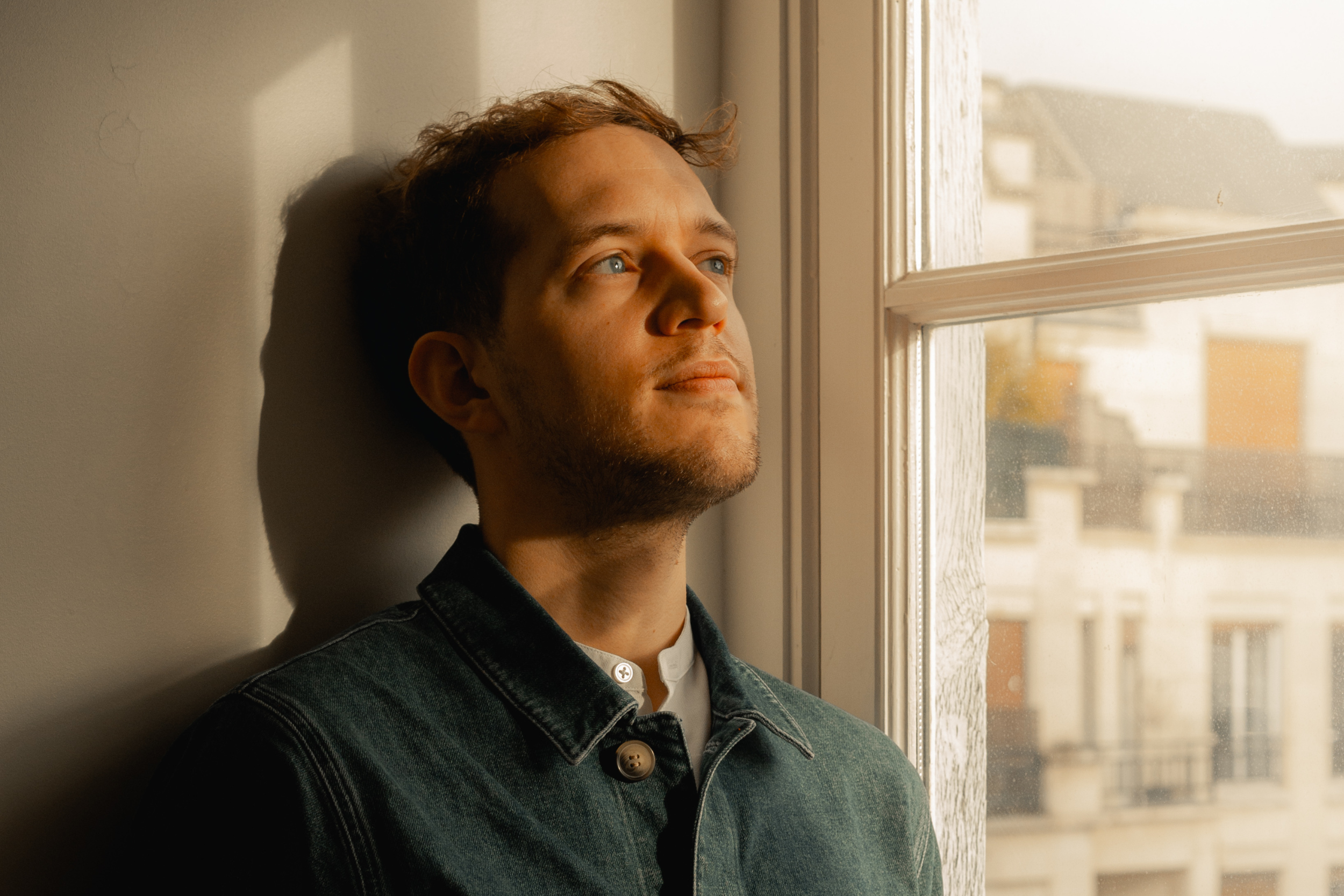
Patrice Revillard / Photos from personal album
I still vividly remember when I first tried Oh Là Là from Teo Cabanel. Years ago, this perfume left such a strong impression on me that I had to get a bottle instantly — at that time in my life, I felt like I could bathe in the scent. Little did I know then that, in the future, I would meet the perfumer behind it and have the chance to interview him.
During my perfume journey, I’ve had the opportunity to sample more fragrances from Patrice Revillard’s portfolio, and I can testify — there is something quietly compelling about his approach to perfumery. Perhaps it’s the balance he strikes between scientific rigor and artistic sensitivity. His path into perfumery wasn’t defined by a single moment or a life-changing fragrance, but by a gradual realization: that this craft sits at the intersection of everything he is drawn to — science, creativity, and an enduring fascination with nature.
Growing up surrounded by the landscapes of the French Alps and shaped by a deep connection to the natural world, Revillard developed an affinity for raw materials — earthy, mineral, and quietly expressive. That sensibility still runs through his work today, alongside a preference for softness, nuance, and what he describes as a more “tender” form of perfumery, in contrast to an industry often driven by intensity and projection.
Having founded his own laboratory early on, Revillard has carved out a path that is both independent and instinctive, free from the conventions that often shape more traditional careers in fragrance. In this interview for PlezuroMag, the perfumer shares the memories that shaped his olfactive world, the challenges of building an independent career, and his thoughts on the evolving landscape of perfumery.
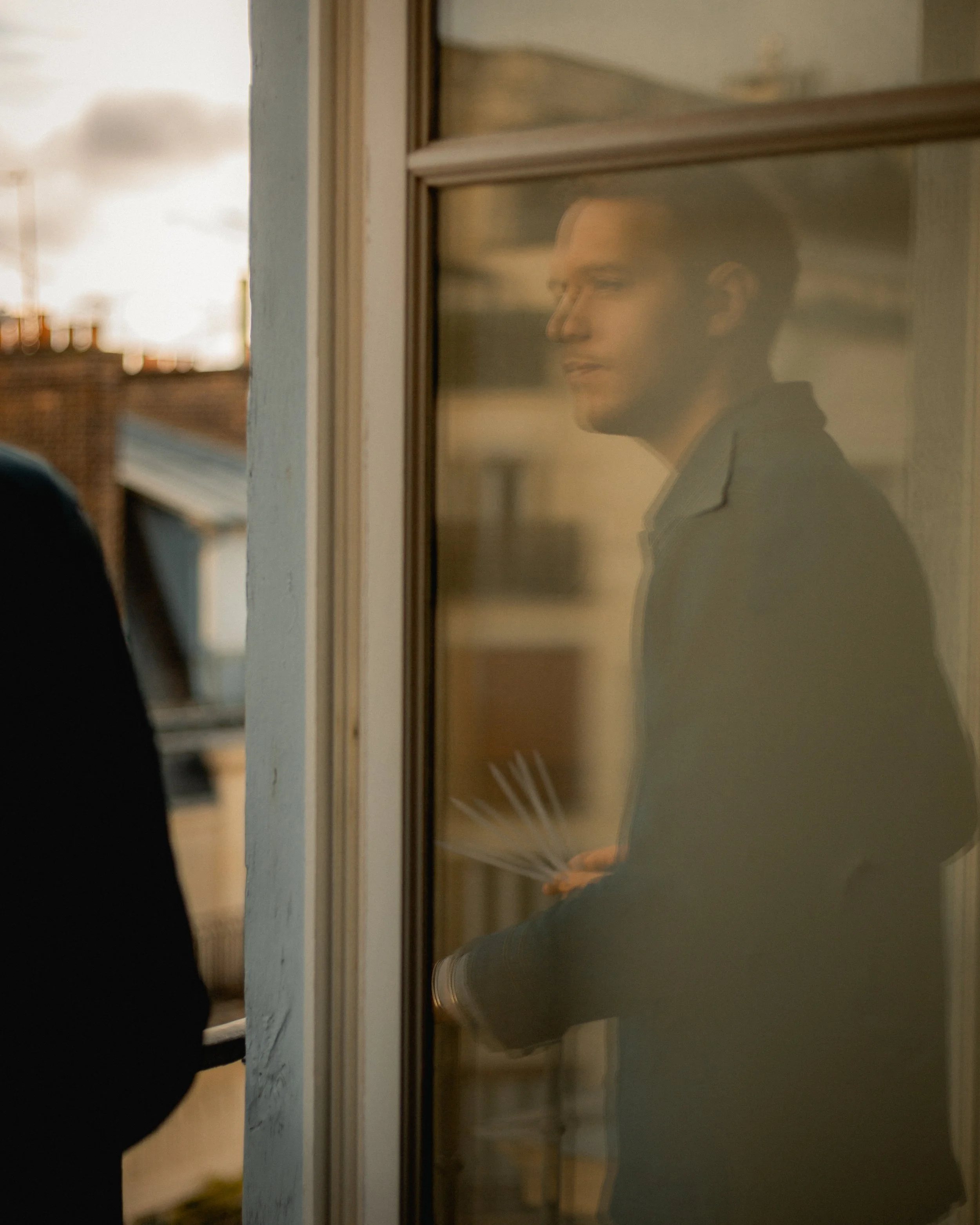
You initially studied biology and chemistry before moving into perfumery – was there a specific moment you knew scent was your true calling? Was there a fragrance that truly inspired you to become a perfumer?
Throughout my university studies, I realized that I needed a creative profession. Something artistically stimulating rather than a career solely focused on scientific research. I have always engaged in creative activities since childhood, whether drawing and painting, or gardening, which I truly see as a creative practice in itself composing associations between plants and shaping them according to spaces. At one point, I even considered becoming a landscape designer. When I began to take an interest in perfumery and discovered that fragrance lies at the crossroads of science and art, I knew that becoming a perfumer was meant for me. So, I can't say that is one particular fragrance that made me decide ti become a perfumer.
Growing up in the French Alps and spending time in gardens must have created powerful olfactive memories. Is there one specific scent from your childhood that you revisit in your work?
Yes, absolutely. I believe that my childhood spent in nature — wandering through the countryside in search of plants or spending entire days in the garden — deeply shaped me. I have a profound love for mineral and earthy scents, for slightly raw woods. I think that is where it comes from. Of course, there are flowers as well. But I believe my passion for botany now translates not so much into the use of a specific flower, but rather into a research-driven approach to flowers — studying their scientific analyses and compositions, either to recreate them as faithfully as possible or to draw inspiration from their olfactory architecture and transform it into something entirely new.
Did you have a mentor or influence who helped you find your own creative voice?
Having founded my laboratory immediately after completing my studies, I did not have the opportunity to train for many years under the guidance of a long-term mentor. Yet perhaps that is also a strength — approaching fragrance formulation without preconceived ideas or clichés. Beyond the education I received at school, much of my development came from personal study: teaching myself, analyzing historic fragrances as well as new launches, observing trends and tracing the connections and lineages between perfumes. This is how I gradually enriched my understanding.
During internships, I was able to deepen the technical aspects of the craft, particularly alongside Fabrice Olivieri, from whom I learned a great deal. I also deeply admire the seemingly intuitive yet highly thoughtful way of composing of Annick Ménardo and Jean-Claude Ellena. I have a profound appreciation for Daniela Andrier’s creations, and I am in awe of the technical mastery and body of work of Dominique Ropion and Alberto Morillas. They are perfumers I truly look up to.
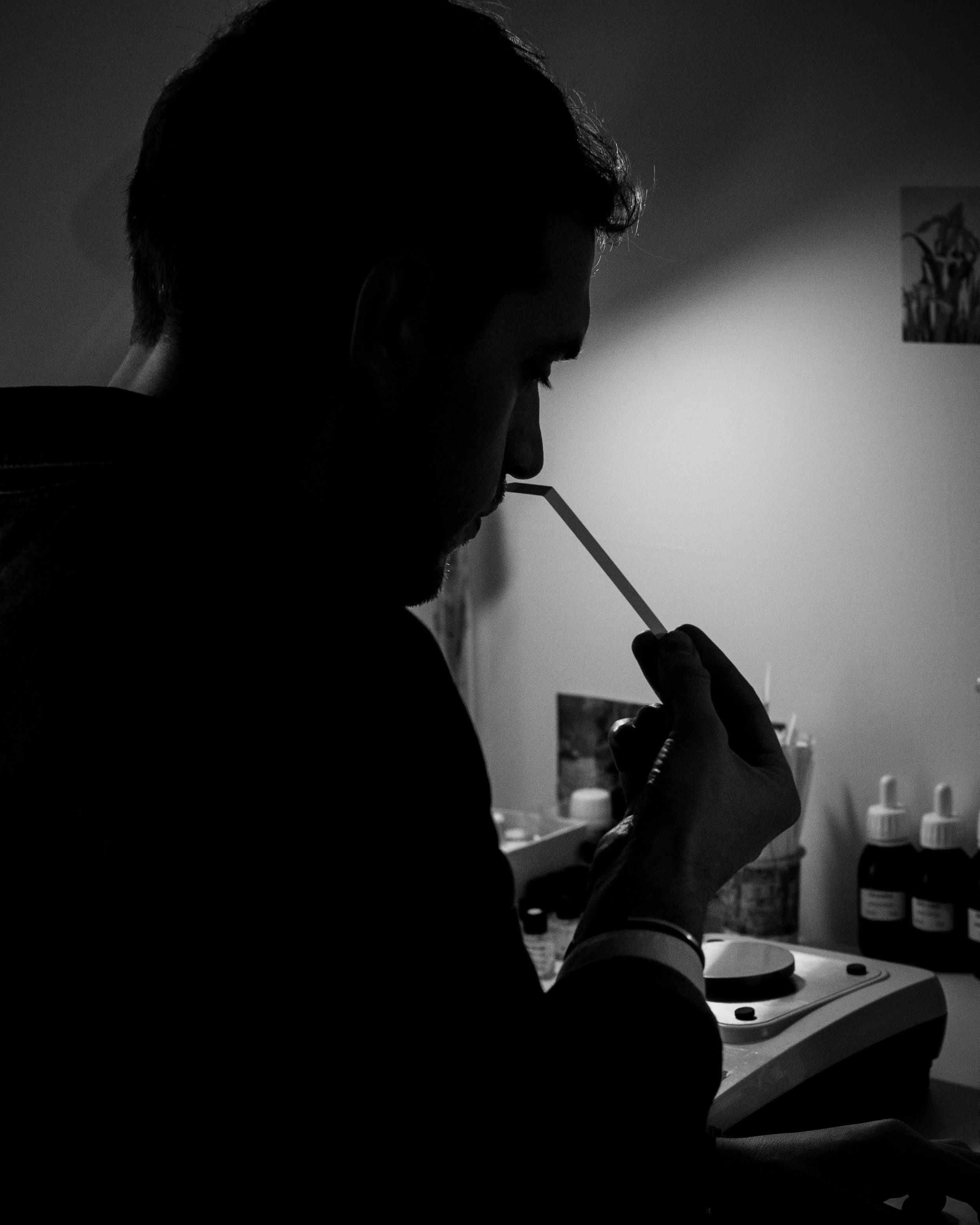
How do you define “signature” in your own work?
It is always difficult to describe one’s own style or “signature,” as creation is often a largely unconscious process. However, since I am frequently asked this question, I have tried to analyze myself over time. I would say that what characterizes my work is a search for textures and effects beyond the scent itself. I am particularly drawn to delicate and tender approaches to perfumery, even if that is not necessarily what the market is currently seeking, as the trend leans more toward an escalation of power and intensity. This sensibility translates into my fondness for musky, “cocooning” notes, which I especially love — perhaps because of my dreamy and slightly melancholic nature. It certainly influences the way I compose. It may also explain why I so often use iris. Many people actually say it has become my signature. It is true that I tend to weave it in, here and there, as a subtle touch.
Which of your creations do you feel is most personal, and why?
I would say Oh Là Là, which I created for Teo Cabanel. It is a tribute to Body Kouros, a fragrance by Annick Ménardo that I believe is far too underrated, yet has always brought me immense pleasure and fascination. I wore it a great deal during that pivotal time in my life when perfume was becoming increasingly important to me and when I was on the verge of turning it into my profession. I would also mention Musc Angélique for Violet. It encapsulates everything I love to work with: clarity, texture, and a sense of obviousness — while reaching for an addictive kind of melancholy.
You have artistic hobbies like painting – do you see parallels between visual art and scent composition?
Oh yes, the parallel is very strong for me. I clearly tend to seek visual inspiration when a client shares a brief. I always ask for images, as well as details such as colors or shapes, to initiate the creative process. I believe this comes from the many years I spent drawing. I naturally think in terms of forms, colors, lines, light, and contrasts — much like in painting. It has become an instinctive way of approaching creation for me.
Founding your own independent lab was a couragious step – what was the biggest challenge in making that?
I founded my laboratory immediately after completing my studies, without first proving myself within an established company. The real challenge, therefore, was earning trust. I believe that was the most difficult part: demonstrating that my youth and unconventional path were not limitations, but strengths.
Do you believe a perfume inevitably carries the perfumer’s personality, even when the brief is extremely constraining?
Yes, I believe that even within constraints, a perfumer’s personality inevitably finds its way into the composition. A perfumer A will not construct a rose or a jasmine in the same way as a perfumer B. That difference in construction influences the overall character of the fragrance, even when the brief is highly detailed and restrictive. As long as we are not simply trying to reproduce an existing smell, there are always many creative possibilities left to explore.
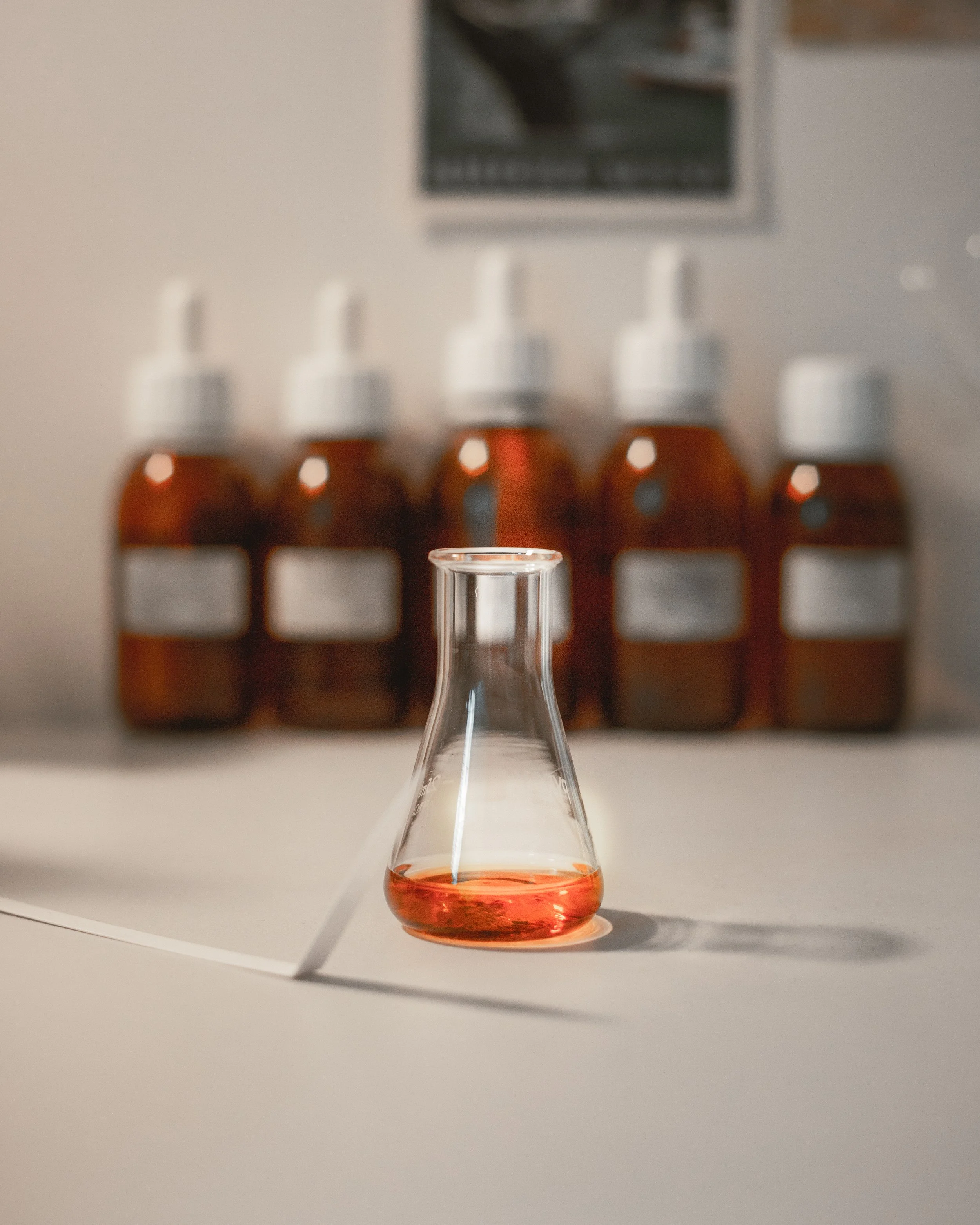
Have you ever revisited one of your own formulas years later and seen it differently?
It has happened several times that I have revisited formulas from a few years ago. I do not particularly enjoy doing so, because it means confronting that eternal feeling of incompleteness and dissatisfaction. Like many creative people, one is never 100% satisfied with one’s work — and if no one tells us to stop, we could continue refining it endlessly, always feeling that it is not quite finished. Over the years, we refine our skills and approach creation differently. So when I reopen an old formula, I often think, “How did I build this? That can’t be right — I wouldn’t do it this way today.” That is precisely why I prefer not to reopen old formulas.
Is there a type of perfume you feel you haven’t made yet, but would like to?
I tend to use citrus notes sparingly in my compositions. However, I love them, and some natural extracts are absolutely sublime. I would love to work around citrus — not in the traditional cologne style, but in a more complex construction that explores their pulpy and radiant facets simultaneously. Otherwise, a true chypre. It is a complex yet fascinating theme that I would love to explore in depth with a brand.
What’s a misconception about perfumery that you wish more people understood?
Many people believe that creating a perfume is simply about blending nice-smelling ingredients together. In reality, it is about structure, balance, research on effects and interaction between materials. Perfumery is both highly technical and deeply intuitive. It demands precision, patience, and an understanding of materials that takes years to develop. The simplicity people perceive is often the result of tremendous complexity behind the scenes. The most successful projects are true collaborations, where trust allows the fragrance to become more than what was initially imagined.
Another misconception is the idea that strength equals quality. The market currently favors projection, intensity, impact. But power is not the same as emotion. A fragrance can be intimate and still be unforgettable. In fact, subtlety often creates a deeper connection.
What’s a fragrance you admire that you wish you had created – and why?
I wish I had been behind Opium. I find this fragrance extraordinary, both in its construction and in its aura. Its richness, its signature, the sequence of notes and effects — it is pure artistry. Perhaps it feels so mystical to me because it belongs to another era of perfumery. That distance in time gives it an almost legendary dimension.

You’ve spoken about elevating the recognition of perfumers’ work – what progress do you hope to see in the next decade?
The fragrance market is undergoing a profound transformation with the rapid expansion of the niche segment. Over the next decade, I hope this evolution will also lead to a greater recognition of independent perfumers and the role they play in shaping the creative landscape of perfumery. Today, we are witnessing an increasing concentration within the industry, where the largest companies are expanding rapidly and taking on projects of every scale — from the biggest launches to very small developments. In such a context, independent perfumers can sometimes find themselves overshadowed, as brands often aspire to collaborate with the most established institutions.
Yet I believe the future of perfumery also depends on preserving a diversity of creative voices. Independent perfumers bring a different rhythm, a more personal vision, and a direct dialogue with the brands they work with. This freedom can lead to unexpected ideas and truly distinctive fragrances. My hope for the coming decade is that the industry continues to value this plurality — because innovation and emotion in perfumery often come from those who have the freedom to explore.
Is there a projects you most excited about right now that you can talk about?
A new fragrance will be launching with D’Orsay this spring [we spoke in the beginning of March, and Candy Rush is launched already, - editor’s note]. We imagined an addictive, gourmand creation built around a marshmallow note — something both comforting and playful. At the same time, several projects with exciting new brands are currently in development. I’m very much looking forward to being able to reveal more about them soon
Thank you for your time.