Between Ukraine, Italy, and the Gulf: The Journey Behind KV Perfumes
Written by Kristina Kybartaite-Damule
Some of the most interesting perfume brands today are built around personal perspective. KV by Kateryna Vel’menko, founded in 2024, is deeply tied to the life of its founder: Ukrainian roots, years immersed in Middle Eastern fragrance culture, and a long-established life in Italy. The result is a collection that moves between cultures and sensibilities while still feeling cohesive.
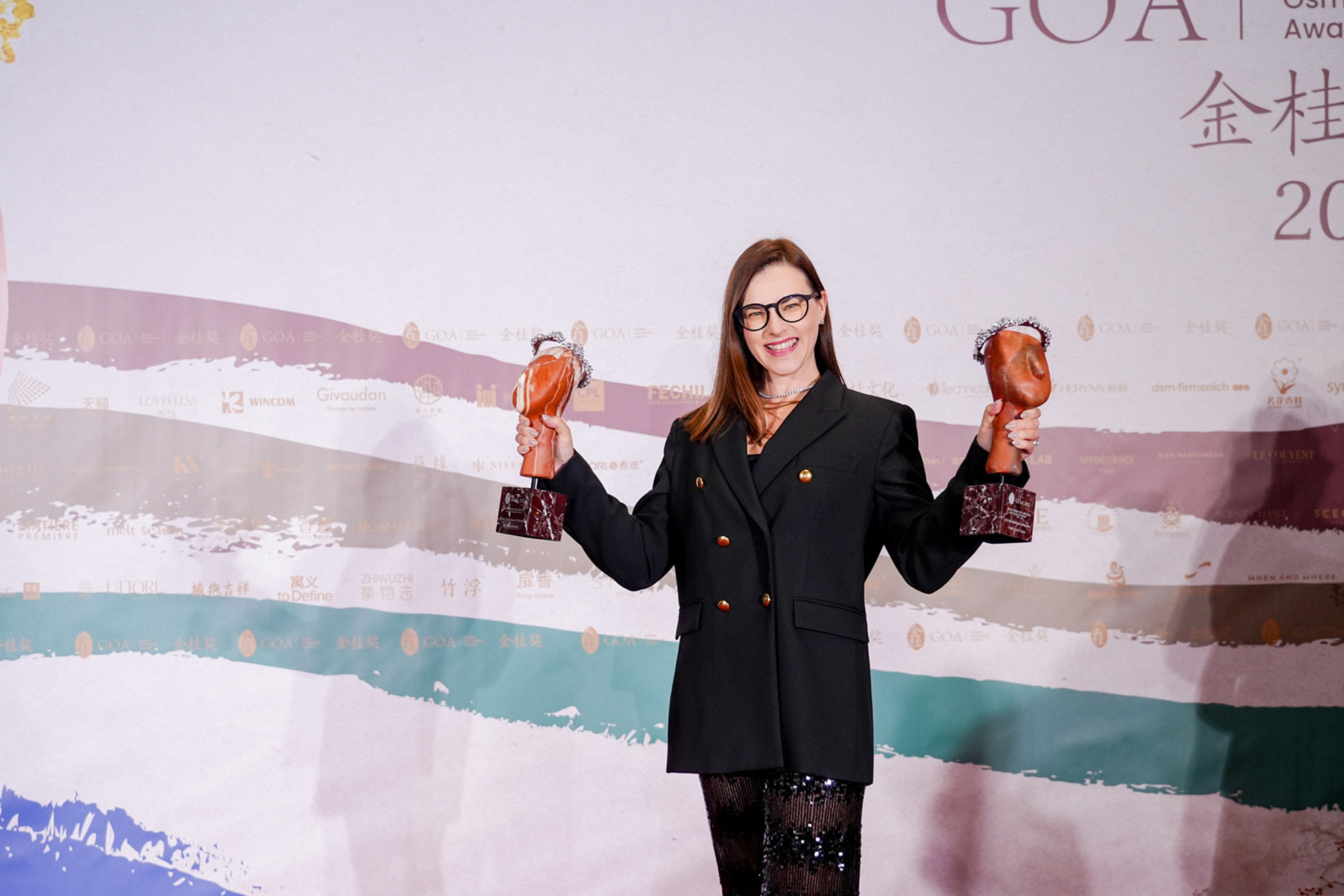
Kateryna Vel’menko / Photo from personal album
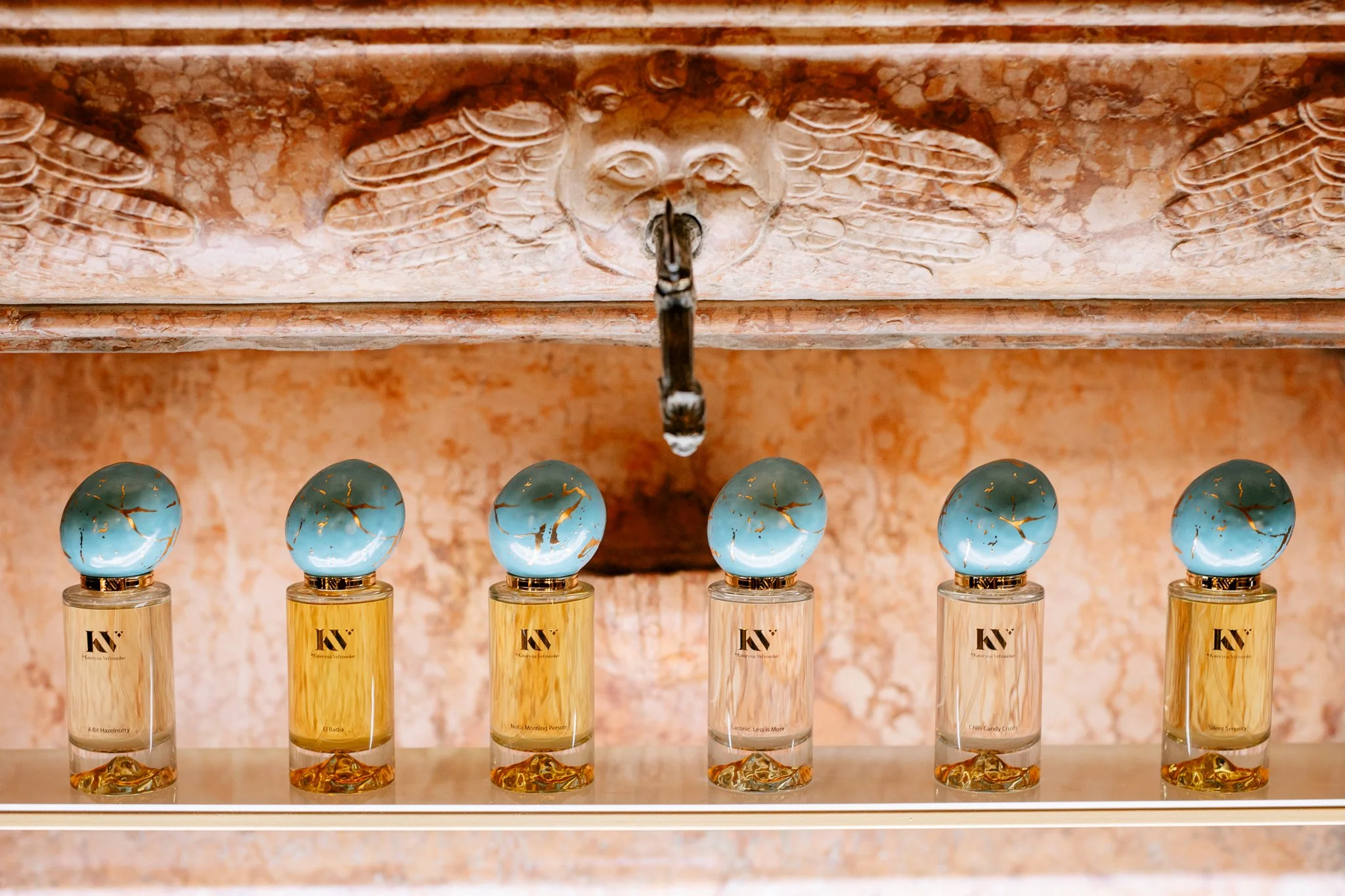
I discovered the brand during a presentation at Boudoir36, the boutique of Antonio Alessandria in Catania. At first, it was the bottles that caught my attention: porcelain caps, sculptural details inspired by the Alps, and a design language that felt both modern and deeply personal. But after smelling the fragrances, it became clear that the visual identity was only one part of the story.
Created in collaboration with perfumers including Antonio Alessandria, Camille Chemardin, Amélie Bourgeois, Elia Chiche, Patrice Revillard and Kateryna herself, the collection reflects multiple cultural influences at once. Ukrainian scent memories, years spent living in the Middle East, and life in Italy all subtly shape the brand’s identity. During an interview for PlezuroMag, we spoke about her unconventional path into perfumery, the challenge of balancing artistry with wearability, the philosophy behind KV’s “perfume wardrobe,” and why simplicity in perfumery is often far more difficult than excess.
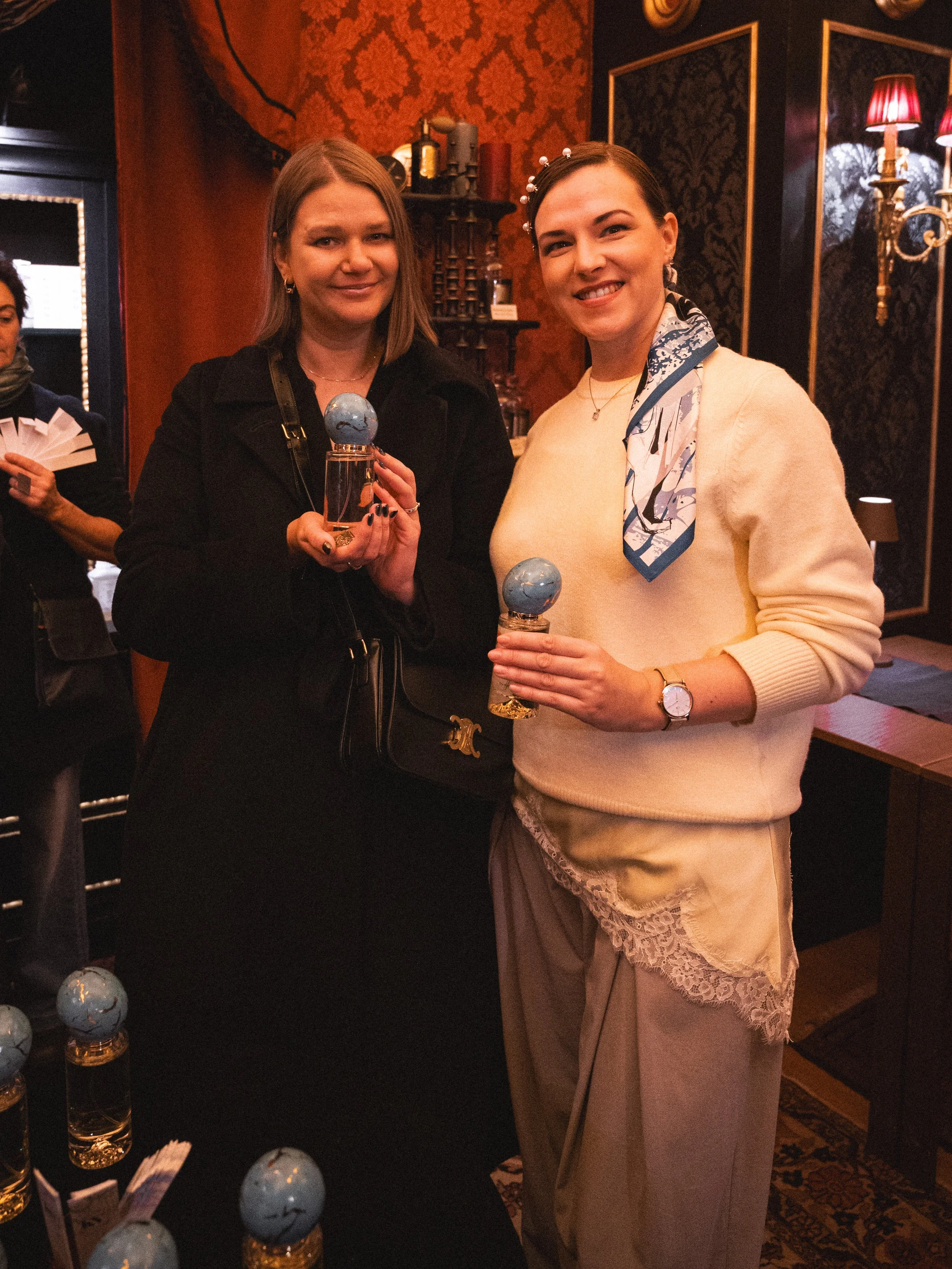
Kristina Kybartaite-Damule and Kateryna Vel’menko / Photo credit: Darius Damulis
Tell our readers a little bit about your background. How did you end up in perfumery, and were you attracted to perfumes all along?
Since I was a young woman I loved perfumes – but everything changed when I travelled to the Middle East.
My background is actually in sociology and government. I was working in HR, building a stable corporate career, while also teaching oriental dance part-time. Then a crisis came, the company shut down, and everything changed overnight.
I moved to the Middle East, where I performed as a soloist in the Bahrain National Troupe. My family was shocked that I left my corporate life and moved so far away, but I never regretted it. I believe every decision is yours – even if it’s a mistake, it’s still yours.
I lived in the UAE, Oman, and Bahrain for more than ten years, and that’s where I truly discovered Arabic perfumery – not just the fragrances themselves, but the culture around them. In malls you’d constantly encounter perfumers, and people leaving these strong scent trails. It felt completely different from anything I knew.
I became fascinated by oud, sandalwood, incense, and by how perfume exists not only on the body, but in homes and daily rituals. It’s part of the atmosphere.
From there, I started learning raw materials, attending workshops, and gradually discovered niche perfumery – something beyond mass-market and designer fragrances, something more artistic.
As I immersed myself deeper, I accumulated a lot of knowledge and eventually felt the need to share it. I started teaching perfumery across Europe, the Middle East, and Ukraine.
Later, I began creating perfumes myself, through coaching with perfumers, courses, and constant experimentation. People started asking to buy them, and eventually asking why I wasn’t doing this professionally.
At first, it felt like a huge step. But with my family’s support, I decided to create my own brand. And that’s how KV was born.
Images provided by the brand
During this journey, did something change in your beliefs about perfumery?
Absolutely. There are many myths in perfumery.
First, there’s what you believe as a consumer. Then what you learn as a perfumer. And finally, what you understand when you build your own brand. It keeps evolving.
One of the biggest shifts was realising that more ingredients do not mean a better perfume.
At first, I believed a great fragrance needed a long, complex formula with rare materials. Later I discovered many master perfumers are known for very short formulas.
I had to learn restraint.
Before, I always thought: “If I add one more ingredient, it will be perfect.” But often, it destroyed the harmony. Perfumery is not only about adding – it’s often about removing.
Another misconception was about raw materials. I thought rare and expensive ingredients automatically made a perfume better.
In She is Glowing, I used Magnolia Alba from Thailand – an extremely rare ingredient. I built the fragrance around it, thinking it would carry the composition.
But it was very difficult to work with. If overdosed, it develops unwanted facets; if combined with the wrong materials, it disappears. It requires precision and restraint. In the end, it taught me how much control is needed to preserve a material’s identity.
I also realised that transparent, clean perfumes are often harder to create than rich oriental ones. Making something feel simple and balanced is actually extremely complex.
Let’s talk about your brand. Your name is on the bottle. Would you say the brand is an extension of yourself?
Yes, definitely. There is a lot of me in the brand.
Even the name took time. I struggled for a long time, but eventually my husband suggested using my name. “KV” was too short for registration, so it became KV by Kateryna Vel’menko. In practice, we mostly use KV.
I also wanted the brand to reflect different parts of my identity – my Ukrainian and Eastern European roots, more than 25 years in Italy, and my years in the Arabian Gulf.
The idea behind KV is also a “perfume wardrobe” – fragrances for different moods and situations, not only special occasions.
Most people wear perfume every day, so I wanted the collection to reflect that reality.
For example, Laconic. Less is More is like a white shirt fragrance – structured, clean, office-friendly. I wear it when I need focus because it gives me a sense of order and clarity.
Each fragrance has its place: some for evenings, some for concentration, some for everyday life.
How has your Ukrainian background shaped your scent memories?
My background shapes everything – my preferences, my memories, and how I build compositions.
Many fragrances are tied to childhood memories. Icicle Popsicle, for example, comes from eating icicles in winter – something people from snowy countries immediately recognise.
Others come from my grandmother’s garden: gooseberries, sea buckthorn, peonies. Very emotional, very specific smells. My mother even brought peonies from Ukraine and planted them in Italy. When they bloom, the scent brings me straight back
In Good Mood Is Loading, I combined gooseberry, sea buckthorn, and an Aperol Spritz accord – a mix of Ukrainian memory and Italian lifestyle.
Living in different countries added layers to how I perceive scent. It’s always a combination of places.
Do you notice differences between how Eastern and Western Europeans sense the smell?
Inside Europe, the differences are not dramatic because French perfumery influences everything.
But scent memory depends on environment.
In the South of France, people grow up with orange blossom and neroli. That becomes emotional memory. For me, it was gooseberries, sea buckthorn, peonies – completely different landscapes.
Globalisation has expanded what people can smell, but early scent memory still stays deeply rooted in where you grew up.
The niche perfume market is very saturated today. What gap did you want to fill with your brand?
Honestly, I wasn’t thinking in terms of gaps.
It felt very natural. I didn’t plan it strategically – I just kept going deeper into perfumery, from raw materials to formulation to packaging. At some point, creating a brand became inevitable.
It was similar to dance in my life. I never planned outcomes – I just followed the passion, and it developed.
Even now, I keep learning constantly through exhibitions, materials, and industry events. For me, perfumery is a process, not a fixed goal.
What would you say has been the biggest success of your brand so far?
The biggest success is recognition from customers worldwide. Seeing people wear the perfumes, return to them, and integrate them into their lives – that matters most.
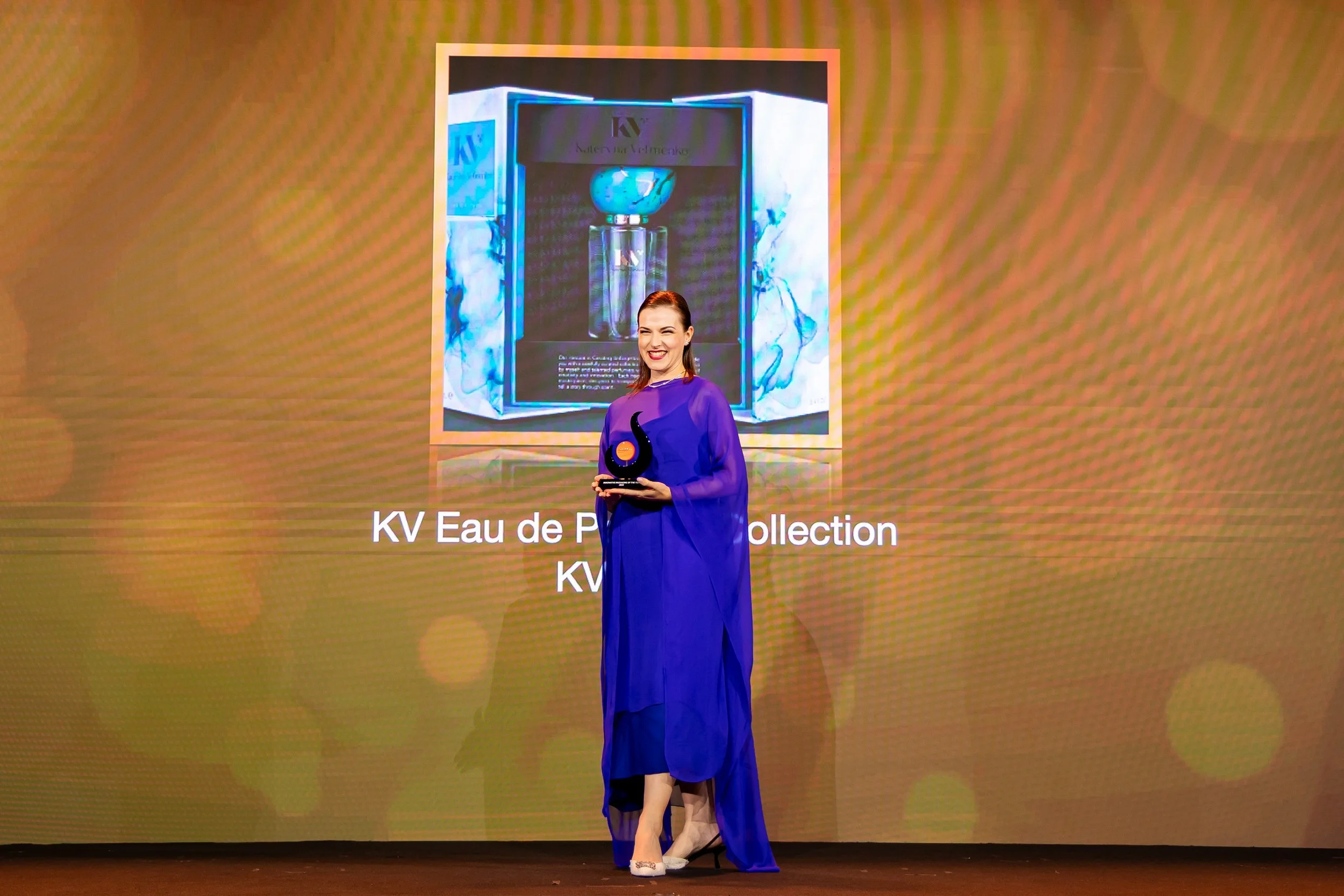
Awards are important too. We won Innovative Packaging of the Year in BeautyWorld Middle East awards, and we were finalists for Newcomer Brand of the Year. Two fragrances also won awards in Shanghai.
But the real success is usage – not awards.
You mentioned your packaging award. The aesthetic feels very intentional. Can you tell us more about the design?
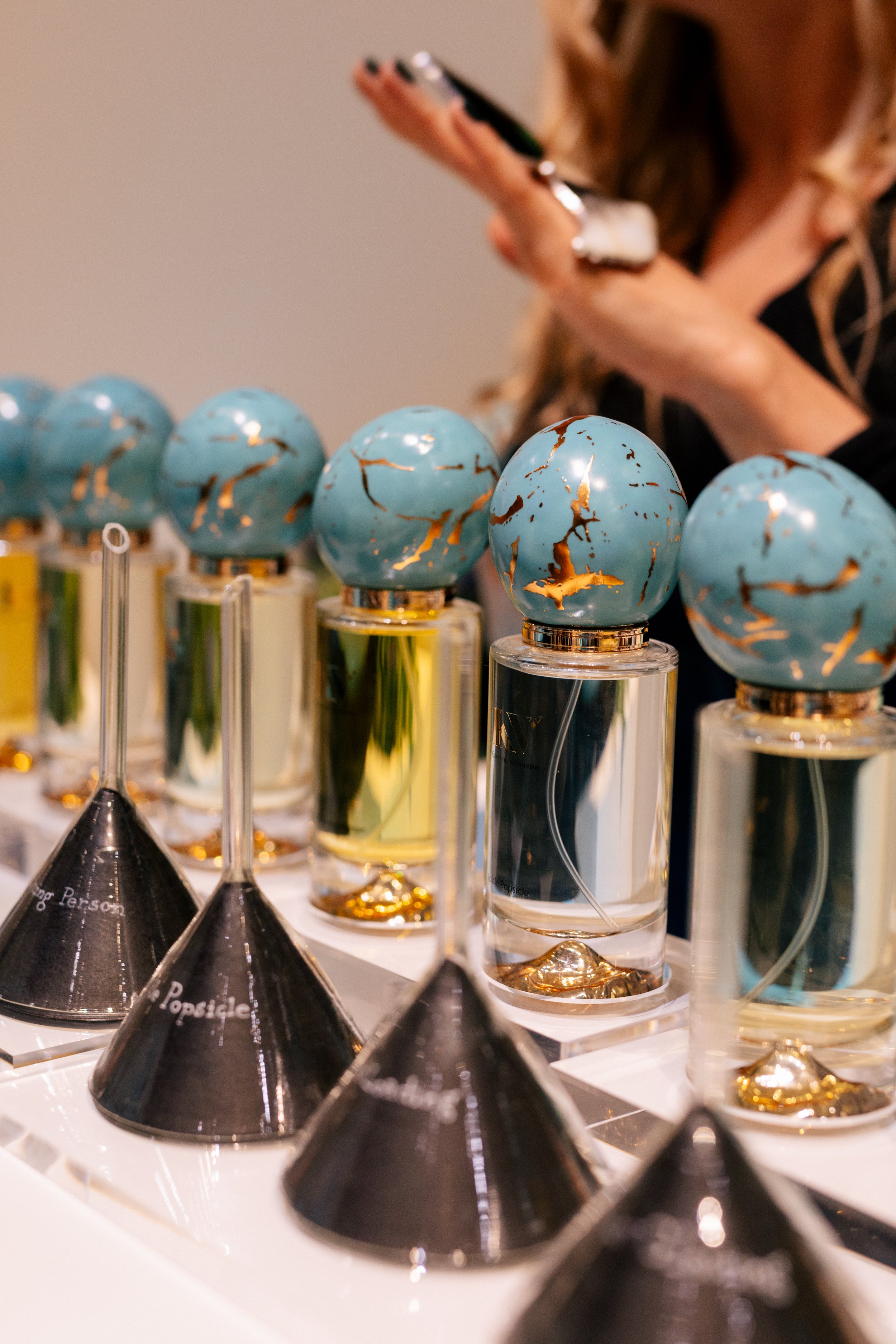
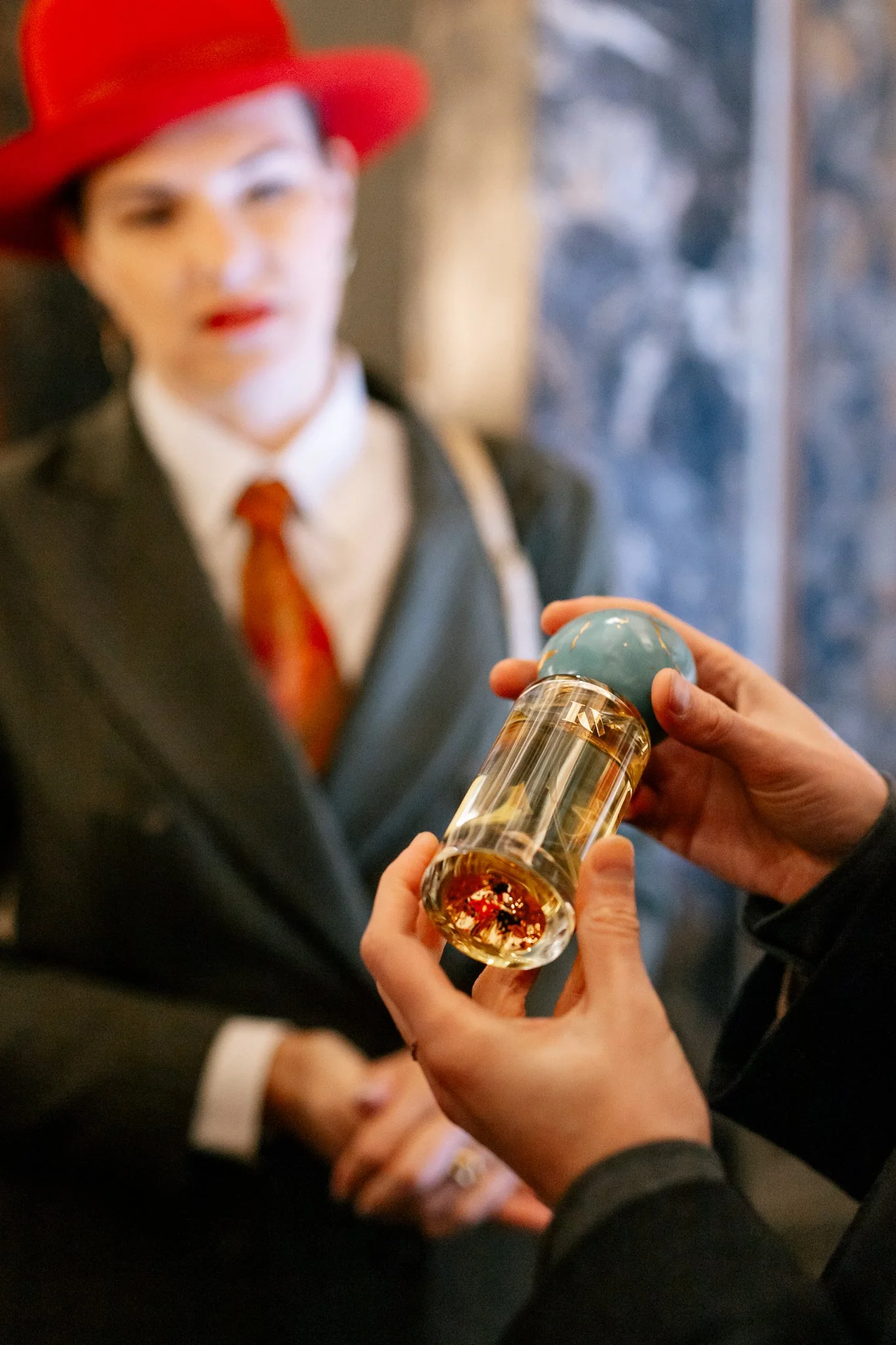
The design is inspired by the landscape in Piedmont, surrounded by the Italian Alps. The silhouette references Monviso, the highest peak in the area.
The concept represents earth and sky, and the colours also subtly reflect my Ukrainian background.
The design was created by my husband as a passion project.
The production was extremely complex – around eleven factories were involved, from porcelain to paper to final filling.
The porcelain caps are handmade, so each piece is slightly different.
We also work with a third-generation French company for final assembly. Many producers refused the project due to complexity and small quantities, but they supported us from the beginning. That relationship became very important to us.
How much attention do you pay to trends when creating perfumes?
We cannot ignore trends completely, but we don’t follow them blindly.
After Covid, people’s perception of smell changed. Many consumers now expect stronger, longer-lasting perfumes. But as perfumers, we focus more on harmony than intensity.
Longevity alone does not define quality. A strong perfume is not automatically a good one.
For me, balance is the key. Sometimes I use certain materials in very small doses to create a more human effect, but always carefully.
Trends should be translated, not copied.
Where do you see the brand in the next five years?
We want to continue growing internationally – we are already present in Italy and expanding across Europe, with the US, Asia, and the Middle East next.
But we are still a family-owned brand, so growth is intentional and controlled.
We are very selective about where we position the brand, because identity matters more than speed.
We prefer long-term relationships with retailers and partners, growing together rather than scaling fast.
The goal is global presence – but without losing our identity, ethics, and concept.
Thank you for your time.