Written by Kristina Kybartaite-Damule
In a perfumery world obsessed with constant launches, Gallivant moves differently. And speaking with its founder, Nick Steward, it becomes clear – the choice is entirely intentional. This conversation didn’t feel like a formal interview – it felt more like sitting down with someone who genuinely loves what he does and is still, after all these years, curious about it.
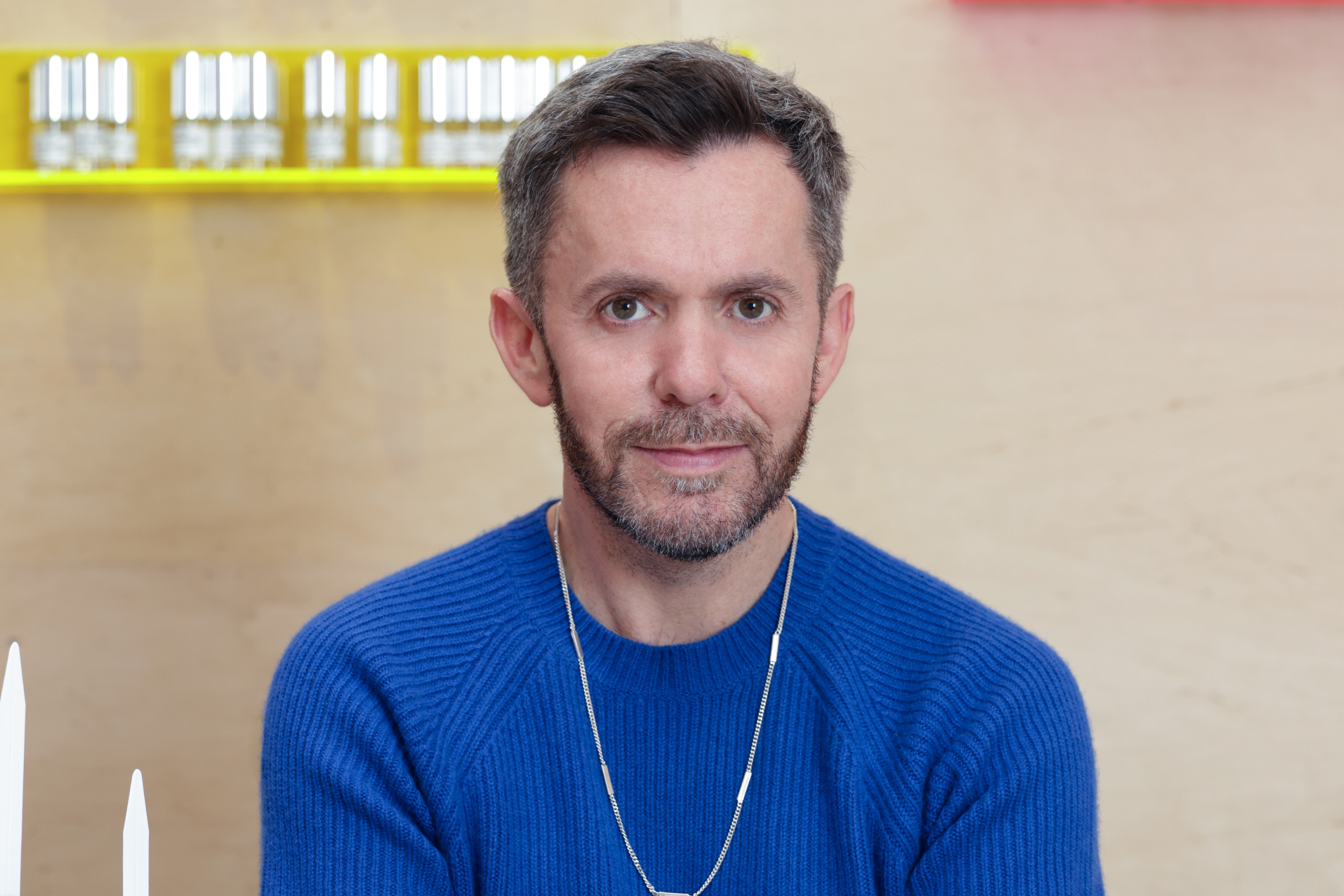
Nick Steward / Images provided by the brand
Nick Steward is not new to perfumery. Before founding his own brand, he spent several years as Creative Director at L’Artisan Parfumeur, working alongside some of the most respected noses in the industry. Later, he created Gallivant, a London-based perfume house that has slowly built a loyal following – not through hype, but through consistency, personality, and a very clear point of view.
What makes Gallivant stand out is its concept: each fragrance is inspired by a city somewhere in the world, capturing not just a place, but a feeling – those fleeting, almost intangible moments of travel. It’s not about postcards or clichés, but about atmosphere, memory, and emotion.
In this interview, we talked with Nick about beginnings, luck, and the people who shape the industry; about slow perfumery, creative intuition, and why not every city becomes a fragrance. It was a warm, honest conversation – one that, in many ways, reflects exactly what Gallivant is about: human, thoughtful, and resistant to the noise.
Let’s talk about your beginnings. In previous interviews, you described your entry into perfumery as something of a happy accident. Looking back, how much of your career was shaped by chance versus intention?
It’s a good question. I think for all of us in life, luck plays a big part. Sometimes people tell you, “Oh no, it was all my strategy; I had it all planned out.” I’m not sure life works that way. So I’m very happy to say that luck has played a significant role in everything I have been through—the luck of meeting good people, the luck of having worked under people like Bertrand Duchaufour, who have a very strong vision of what perfume is and what perfume can be. I’m very grateful for all the people along the way over the years who have helped me and taught me things, and I hope that in my own way, I am also passing on my perfume knowledge to new people. I think that’s the way this industry should work.
Before creating Gallivant, you studied languages…
I studied Arabic, actually. In my younger years, I studied various languages, and then my teachers told me I could take on a difficult language. So I chose Arabic, which is one of the reasons I know the Middle East well, because I lived there as a student studying Arabic language and history.
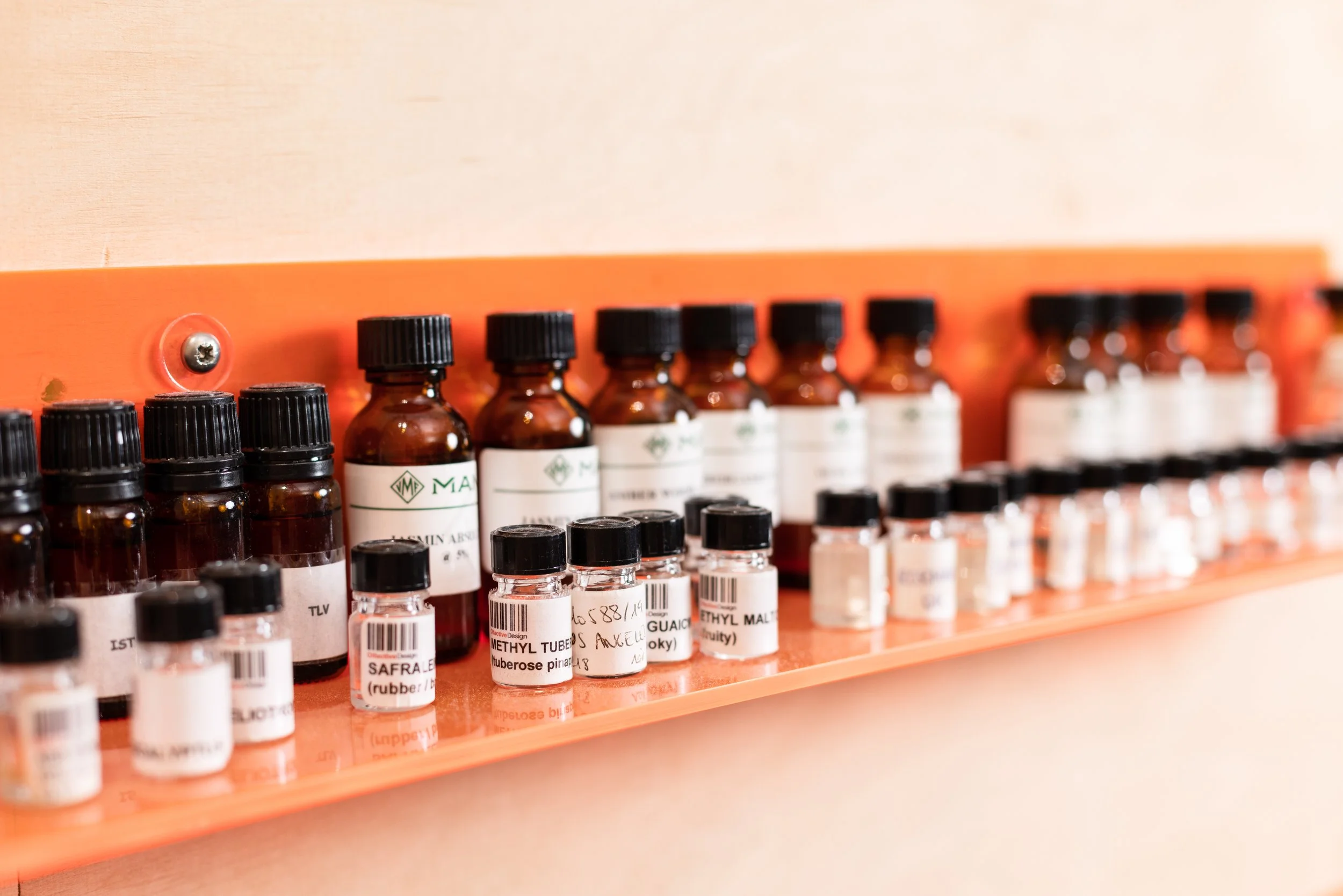
Gallivant studio
And these languages that you know – did they, in some way, influence you in how you started telling stories about countries and different cultures through your perfumes?
I think part of being a good linguist is being a good listener and a keen observer of things, of cultures. So, my curiosity about other cultures is, in a way, linked to my inclination toward languages. But even for languages I have no knowledge of – where I can’t read, write, or speak, like many of the languages from the Indian subcontinent – I’m still very interested in India, Sri Lanka, Nepal, Pakistan, and Bangladesh. So, I don’t always feel disconnected from a culture or a place just because I can’t speak the language. For me, the overarching thing is a curiosity about the world, and that curiosity definitely influences my approach to perfumery.
Was there a particular moment when you realized that you wanted to create your own brand and pursue a career in perfumery more generally?
Since I started working in perfumery almost 30 years ago, I’ve always felt that I found my place. Part of that is also the feeling of having found my tribe. The people in perfumery are interesting, creative, curious, clever, and sometimes a little mad people who create these amazing works. Being around them is a real pleasure, and I feel very grateful to have that in my life.
All of your perfumes are centered around travel and specific places. What is it about a particular city or location that inspires you to create a perfume?
That’s a good question. It’s hard to put into words, honestly, but it’s a feeling. I don’t know if you’ve ever experienced it, but sometimes when you land in a city and the plane doors open—the first rush of air, the heat, or even the extreme cold—you feel an emotional frisson. I’m always quite tuned into places where I sense that kind of emotional vibration, because I know I can then translate it, working with the brilliant perfumers I collaborate with, into a beautiful, elegant fragrance.
I have to be honest, though: sometimes I’ve been to places where, for whatever reason—because everything artistic is very subjective—I simply don’t feel that vibration. In those cases, I don’t think, “Ah, I’d like to create a Gallivant perfume inspired by this city.” But I don’t want people to interpret that as a negative. It’s just that we’re all human, tuned to certain emotions and not others, and that’s simply part of the creative process.
And is there a city that you personally love but still didn’t manage to translate to perfume?
Yeah, Edinburgh. I’m sure I’ll get a few questions about Edinburgh! I studied at the University of Edinburgh, so I have many happy memories from my time as a student there. Of course, at 18, you’re still really a child in a way, trying to find your place in the world.
But I’ve never really thought to myself, “Ah, I should create an Edinburgh perfume,” even though I spent three or four years living there. I don’t know why. It would probably be an interesting city to interpret, especially because of the winter—the cold is intense. That could be a fascinating aspect to explore. It hasn’t happened in the first nine years of Gallivant, but who’s to say it won’t happen in the next decade?
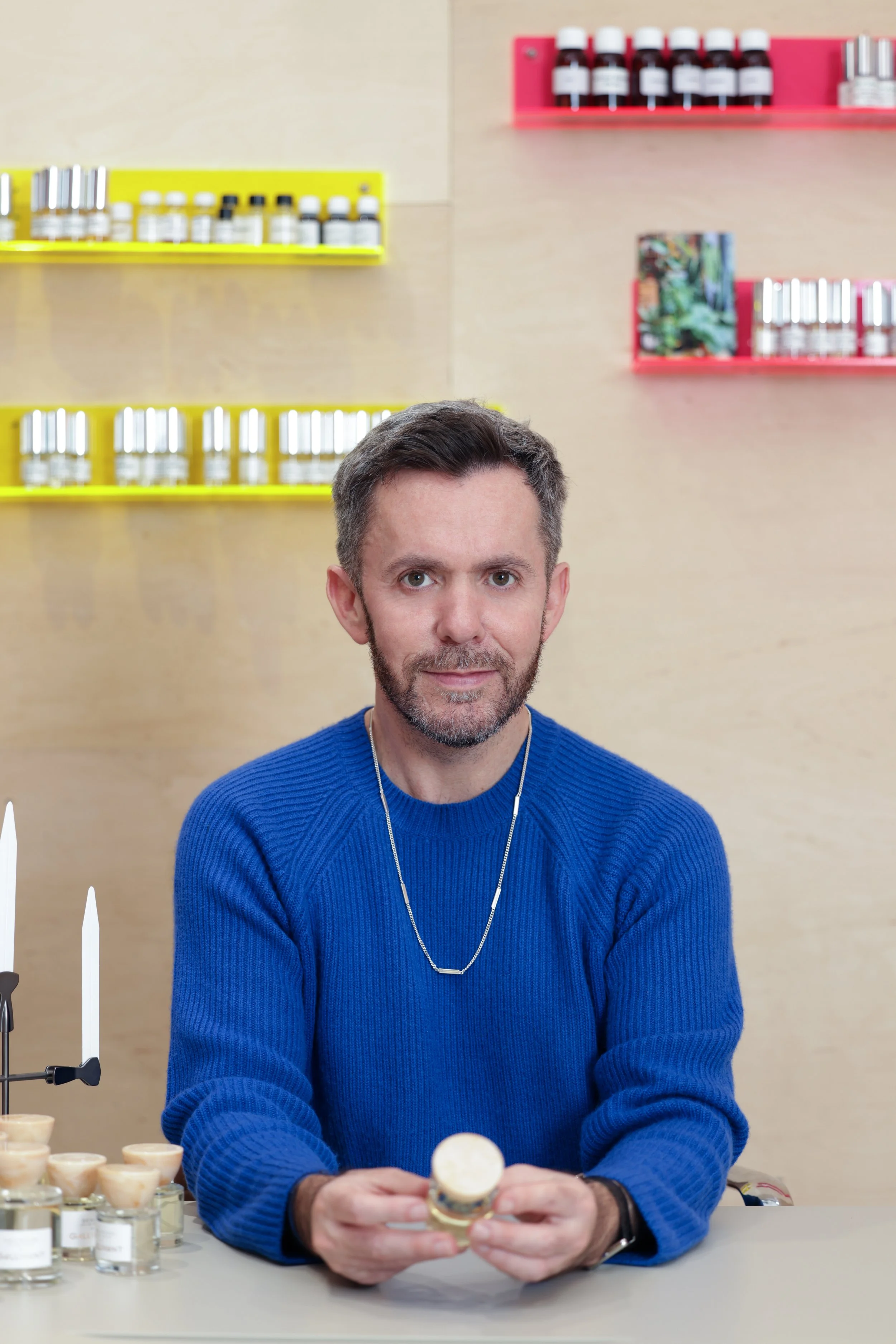
Gallivant just celebrated its nine-year anniversary. Looking back, which achievement are you personally most proud of over these nine years?
I think, first of all, just to keep going. Lots of people have said to me this past week or so that it really is an achievement to be an independent perfume maker in today’s perfume buzz. We know it’s not easy. But one thing I’m really proud of is the relationships we have with our customers. It feels very—I'm going to repeat the word—human, organic. Some of our customers even become friends, and that’s something really lovely.
I’m really proud of that, and it feels very real in a world where sometimes all this social media stuff, while great, can feel a bit disconnected from reality. Maybe that’s a bit of a generational thing, but I truly value these very human, one-to-one, simple, honest relationships. Our customers seem to enjoy and appreciate that.
Actually, they often say—because it seems so rare now, which I don’t always realize—that the customer service they get from Gallivant is on another level. And I just think, well, it’s normal, isn’t it? Though, I suppose it’s probably not that normal anymore.
And what’s the biggest lesson you’ve learned over these nine years about running an independent perfume house?
I think the number one lesson I would say is that you have to be prepared for the long haul. We all like the idea of businesses that blow up, of overnight success stories—they’re always nice to read about—but the reality is, you have to love what you do. You have to love the style of perfume you’re creating and truly believe in it, because building an independent perfume house is a marathon, not a sprint.
Is there a fragrance in your collection that feels most personal to you?
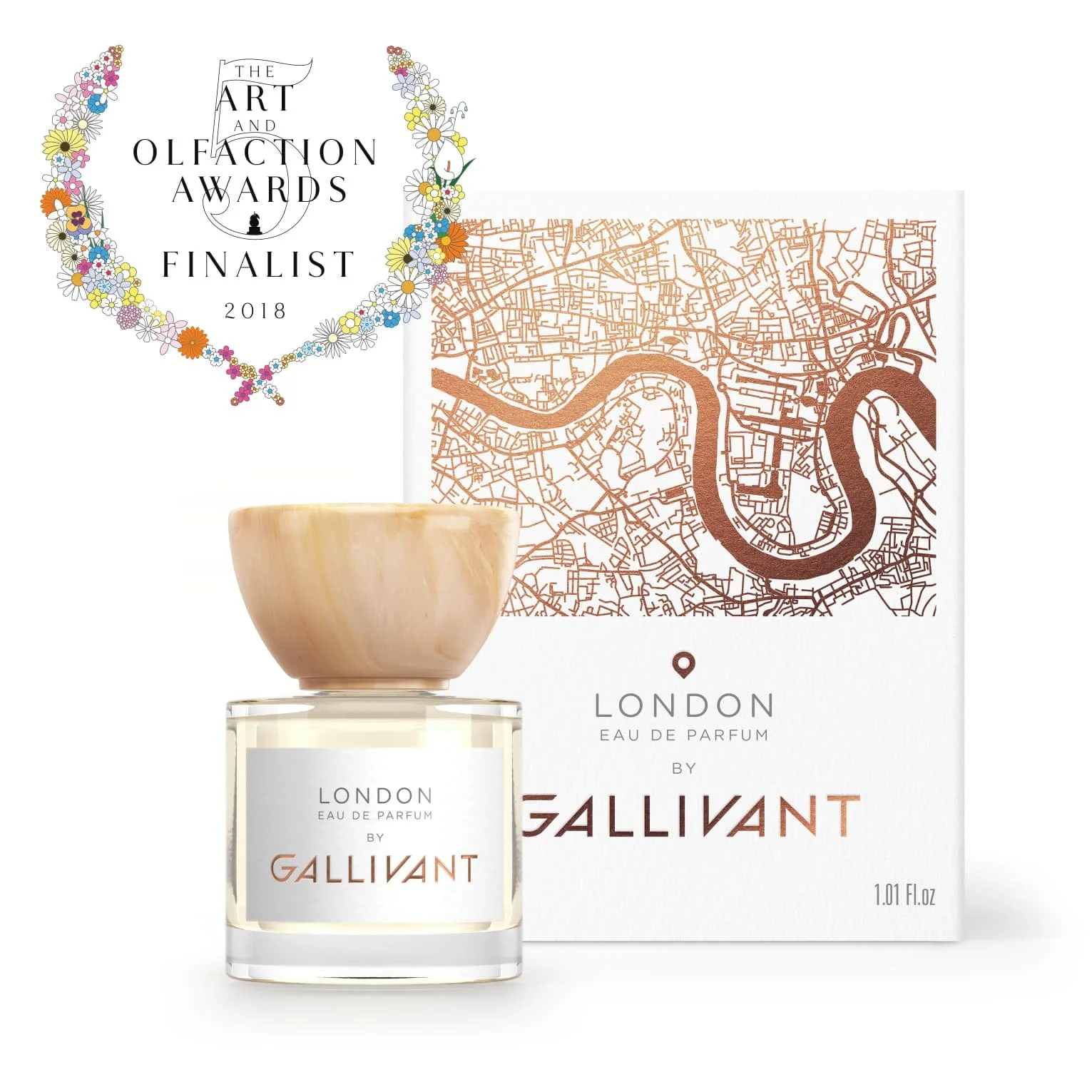
I think that changes over time, quite honestly. The London perfume, which I created with Karine Chevallier and launched at the very beginning alongside Istanbul, has, in a strange way, come to feel even more personal to me as a Londoner. The idea was really inspired by the Pet Shop Boys song “East End Boys, West End Girls.” Karine and I are of a similar generation, so that song meant a lot to both of us.
There are elements of the florals with the rose, and the watery dimension in the formula, that were really inspired by a rose tree in my garden here in London. As we approach these nine years, I’ve found myself wearing London a lot over the past couple of months—maybe because it feels so important, so fundamental to the Gallivant range. We are a London brand, and I’m very pleased that this fragrance, year after year, continues to grow in popularity.
I also think it’s a very nice showcase of the style of perfumery that Gallivant embodies: elegance, intelligence, and playfulness. To have cucumber water on top of a very expensive Rose de Mai Absolute—it’s fun, it’s playful.
So could you say it’s kind of like a signature of Gallivant?
I think it probably is, actually. I’m sure you’ve had this experience a lot—when you ask creators or people behind brands, what’s the DNA? I’m not sure any of us can always articulate it because it’s so personal. It really comes from ourselves.
I think the DNA of Gallivant, overall, is precisely what I’ve just said about London. There’s a certain playfulness—I want our perfumes to bring pleasure, to spark joy. At the same time, there’s a certain rigor in our perfumery. People will tell us, sometimes, “Oh, I didn’t realize you were a British brand,” because they feel the perfumery is very French, inspired by classical French perfumery. I take that as a compliment, quite honestly.
But ultimately, I want our perfumes to feel very pleasurable to our customers, and London is a good example of that.
Your latest collection, inspired by the Gulf region, feels quite different from the rest of your collection.
It is. First of all, they’re very, very rich and very concentrated. We’re at 36 percent, which is the maximum I could even do while conforming to the regulations. I hope you find the same playfulness in them. For example, the blood orange note that we added was my idea. We’d already done quite a lot of mods before I said to Céline [Perdriel, - editor’s note], “Let’s add a little bit of juiciness, let’s add a little bit of contrast.” I think that’s fun.
What I wanted to do was a fusion of classical European French perfumery with some of the influences of the Middle East. I was very clear when I started working with Céline: I’m an Arabic speaker, I know the Middle East very well, but we’re not a Middle Eastern brand—we are a European brand. And personally, I didn’t want to try to somehow copy the richness of Middle Eastern perfumery; I didn’t feel that would be credible for us. So it’s very much a fusion of Western and Middle Eastern perfumery styles.
How do you see the evolution of niche perfumery over the last ten years? Do you think niche perfumery still truly exists today?
I think we need to be careful when we talk about “niche.” I do believe niche still exists. For us in the industry, discussions about semantics can be interesting, but if you ask the average person on the street what niche perfumery means, they’ll probably think of brands like mine. To them, it’s either mass market or niche. So whether we like it or not, we’re lumped in with brands like, for example, Le Labo.
For us, though, I see an interesting fork in the road between what I’d call “money brands” and “artistic brands.” I’m not saying one is better than the other—they’re just different choices. Personally, I’m much more on the artistic side because I come to this from a love of making perfumes and a love of perfumery itself. I’m not thinking about raising $60 million, being in 20,000 stores, or opening global standalone boutiques in London, New York, Los Angeles, and elsewhere. That’s not the world I’m in.
You probably know Sarah McCartney in London—she’s a brilliant spokesperson for British perfumery and, in a way, for the more artistic side of the industry. She often says to me, “We’re making bottles of perfume with some soul in them,” and I think that’s a perfect way to put it. I care deeply about everything that goes into a bottle and I’m involved in every step of the process.
Some perfume entrepreneurs come from outside the perfume world and don’t know much about perfumery or its history. I wish them well—starting any business is always a risk—but I do wonder. Imagine if I announced tomorrow that I was going to become a pâtissier: I enjoy eating pastries, but I’m not a skilled chef. It’s the same in perfumery—history and knowledge matter. I still believe it’s essential that anyone in this industry understands the craft, the heritage, and the history of perfumery.
I talk more and more with our customers about slow perfumery, and they respond to it. In a world that feels so fast and overwhelming, there’s something meaningful about brands that choose to go a little slower and more thoughtful—it really resonates.

Actually, my next question was about slow perfumery and how does it work in Gallivant. What is slow perfumery to you?
I think part of it is the economic model of businesses. When you work in a brand that's owned by investors, obviously they want to see growth every single year. And as you know very well, growth in the perfumery industry often means launching lots of new products. I think there's a growing feeling that we need to step back and ask ourselves why we are doing this.
I don't want the perfumery world to become like the fast fashion world, where we have drops of new products every couple of weeks. I personally think that didn't work out very well for the fashion industry. So, slow perfumery for me means not chasing this business model of constant newness. It's about celebrating the perfumery we already have that’s beautiful.
We have a big enough range today—13 Eau de Parfums, 4 Parfum Extraits, including the one we have exclusively for Fortnum & Mason. With Nida coming back in May, there will be five Extraits. For a small business, that’s a big range to maintain and produce. So, for me, slow perfumery is about balancing economic sustainability with remaining a small-batch, sustainable maker.
The other thing I would say about slow perfumery – the time we take to finalize a formula is very slow. The most extreme example would be Los Angeles—I probably drove Karine slightly mad. It took four years.
Four years? Wow.
Yeah. And at one point I said to Karine—you know, we’ve known each other a long time, since my L’Artisan days, so we’ve been friends and colleagues for many years—I said, “I’m a little bit blocked on it. Let’s just put it aside, and it will come back to us when the moment is right.”
She later told me she thought I was killing the project, that I’d lost interest and was just thinking, “Oh well, let’s leave it.” But then, six or seven months later, I had an idea. I called her and said, “Karine, I woke up in the night and I think I know what we should do for the next mod.”
So slow perfumery is also about the luxury of time. I’m working on something right now with Ralf Schwieger, a great perfumer who created Bukhara for us, which is probably one of our most special fragrances—very niche, not necessarily for the everyday customer who just wanders in. And that project has been going on for two and a half years.
I think perfumers also value that process, because in parallel they’re working on projects for much bigger brands. The whole equation is different, of course, but they often have to turn things around in six weeks, which I think is very difficult.
Coming back to the cities, if Gallivant itself was a city, what kind of city it would be?
I think it’s a mix of the whole collection, because every city we have today is a part of Gallivant. It would have to be somewhere with contrasts—different sides, not too linear. Ideally, with a nice climate, as I’m not really a cold-climate person.
There would have to be water, I think. Ralf himself, when we launched Bukhara, said to me, “This is a unique perfume.” I said, “It’s a very unique perfume, Ralf—it’s such a beauty.” And he looked at me and said, “No, Nick, it’s unique because everything else you do is either on a river or by the sea.”
And he’s right—most of the Gallivants have a coastline. Nida is also special because, of course, you have water on both sides.
After 30 years in perfumery, what still excites you in the industry?
Quite honestly, I’m still excited about working in perfumery and creating perfumes. I still love this aspect of it. I’m still in love with the perfume industry and the people in it.
There’s so much work by friends that I admire—people like Francesca Bianchi, and Neela Vermeire, who is such a dear person, just to name two. Liz [Moores, - editor’s note] at Papillon here in the UK is another example—her work feels truly timeless. Her perfumes aren’t trend-based creations, and that’s something I really admire.
The same goes for Neela—her work doesn’t feel fleeting or of the moment. You can imagine it lasting. Gallivant’s Istanbul is a good example as well. I can honestly imagine people wearing it in 25 years’ time. It feels like a timeless modern classic, and that’s what I love about this kind of slow perfumery.
My last question—of course—is what’s next for Gallivant? Can you give us a hint about the projects you’re currently working on?
Nida is coming up in May. I’m very excited about that. As you know, I launched it as a limited edition originally because Nida to me is a place of summer holidays. And it’s such a beautiful place, it’s such a beautiful inspiration, and the perfume found its fans so quickly.
And quite honestly, so many customers kept on writing to me to say, “My bottle is empty and I’m really sad. Why won’t you bring it back?” And there was a little bit of me that’s a bit stubborn — it’s silly — that was kind of saying, “No, it was a limited edition, it won’t come back.” And then more and more people said, “No, no, no, really, you’ve made something so beautiful, bring it back.”
So it’s coming back with slightly updated artwork, so that I’m very excited about this year. Almost like bringing back an old friend. And I think this will be a permanent addition to the range.
A project on the horizon with Ralf — a floral perfume. I won’t tell you too much more, but maybe that will be next year. I don’t really know. We don’t have a deadline as such. That’s the luxury. But we’re making very, very good progress.
So yeah, more things coming in the future, but also very firmly staying in our lane of authentic slow perfumery and carrying on doing what we love.
Thank you for your time, Nick.