Written by Kristina Kybartaite-Damule
Perfumer Karine Chevallier has created fragrances for Gallivant, D’ORSAY, Stéphane Humbert Lucas, and other niche houses. In an interview for PlezuroMag, she shares the story behind her studio, Olfactive Design, the realities of working independently, and what her students continue to teach her about scent.
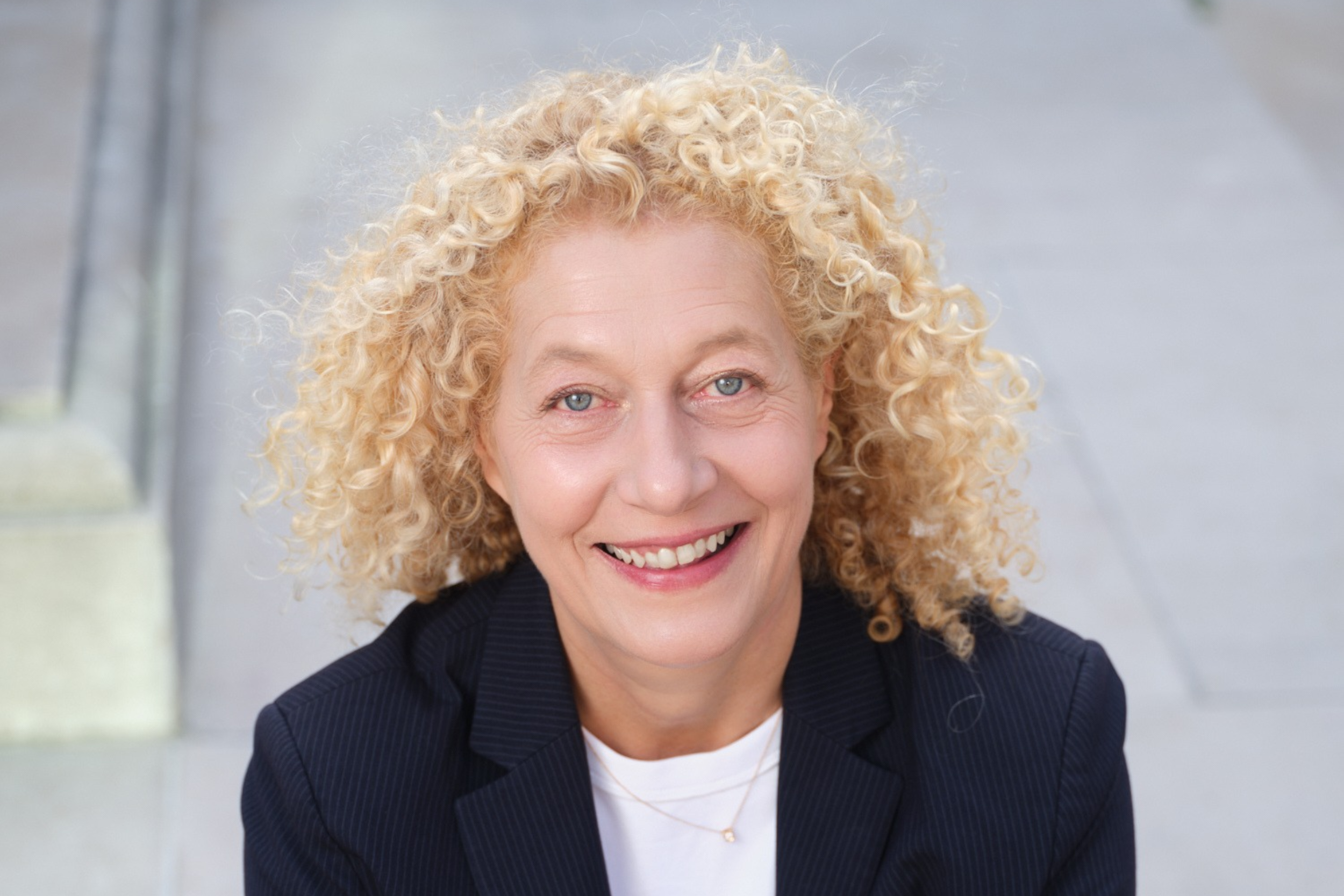
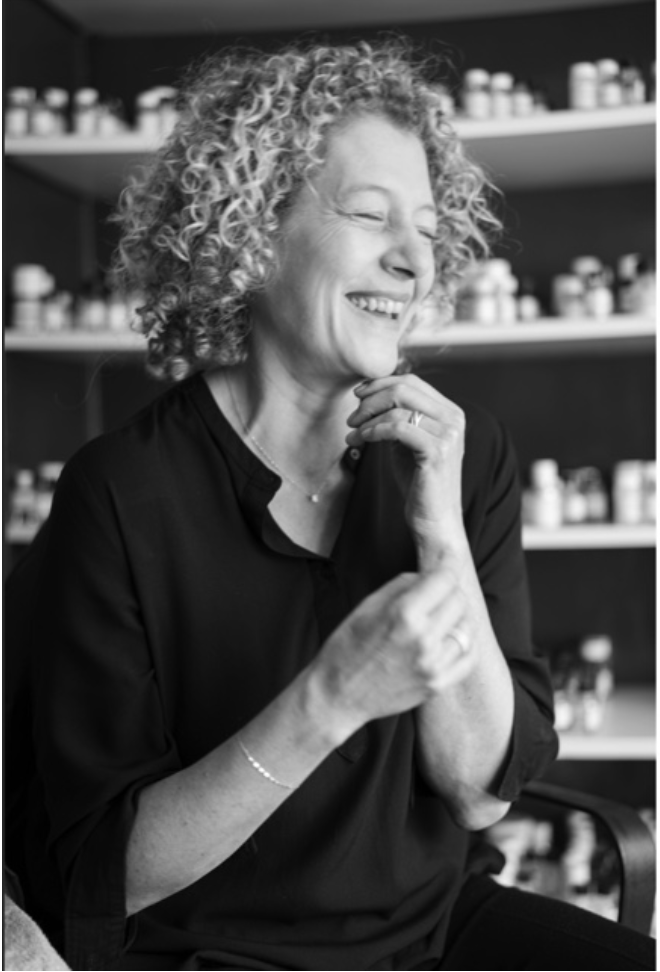
Karine Chevallier / Images from personal album
I always enjoy having a chat with Karine Chevallier. Kind, fun, and wonderfully direct, she speaks about her work with a humour that makes it easy to keep asking questions. I have long admired her creativity and the perfumes she has composed for different houses, so I was curious to hear more about the person behind them and the way she works.
Karine founded Olfactive Design in 2005, after several years in the fragrance industry. Today, she works from her home, where she has her own laboratory, and also teaches at the École Supérieure du Parfum in Paris.
Our conversation took us from a childhood encounter with perfumery on television to the car accident that prompted her to start her own company. Along the way, we talked about creative intuition, the pressures facing independent perfumers, and why a classroom can still reveal something new about a material she smells every day.
Do you remember the moment when you realized you wanted to become a perfumer?
Yes, and I always tell the same story, because it’s a real one! My parents say I was always smelling things when I was little, although I don’t remember that myself.
What I do remember is being around ten or twelve, watching television with my older brother. There was a programme where people had to guess the unusual profession of a guest. The guest was Nicolas Mamounas, who was then a perfumer for Rochas.
Nobody guessed what he did. At the end, he explained his job, and I said to my brother, “When I grow up, I want to become a perfumer.”
After that, I started collecting miniature perfumes, smelling them, and keeping perfume advertisements from magazines. When I was about sixteen, I received an Olfactorium from Cinquième Sens for Christmas, so I could start making little trials myself.
At that age, I was also considering becoming a photographer. My parents took me to a photography school and told me to go inside and ask how to apply. They explained that there was an entrance examination, and that I would have to draw. I’m very, very bad at drawing!
So I said, “Thank you, goodbye,” went back to the car, closed the door, and told my parents, “Okay, I’m going to become a perfumer.”
Was anyone in your family connected to perfumery?
No! I don’t think my parents even know how to hold a blotter. If I give them something to smell, they hold it the wrong way round and say, “It smells good.”
But my father wore Vétiver de Carven, and that perfume was very important to me. I remember it as something beautiful. He also sometimes used a lavender cologne after shaving. Those two smells are important memories from my childhood.
How did you decide to become independent and start Olfactive Design?
It was quite a long journey. At ISIPCA, we alternated between a month at school and a month working in a company. I worked at Haarmann & Reimer, which later became part of Symrise. After graduating, I stayed for another year as Mark Buxton’s assistant and student.
When that contract ended, I worked at different companies before finding an assistant perfumer position at Dragoco. But I was weighing formulas all day, and I found it incredibly boring. I became very unhappy.
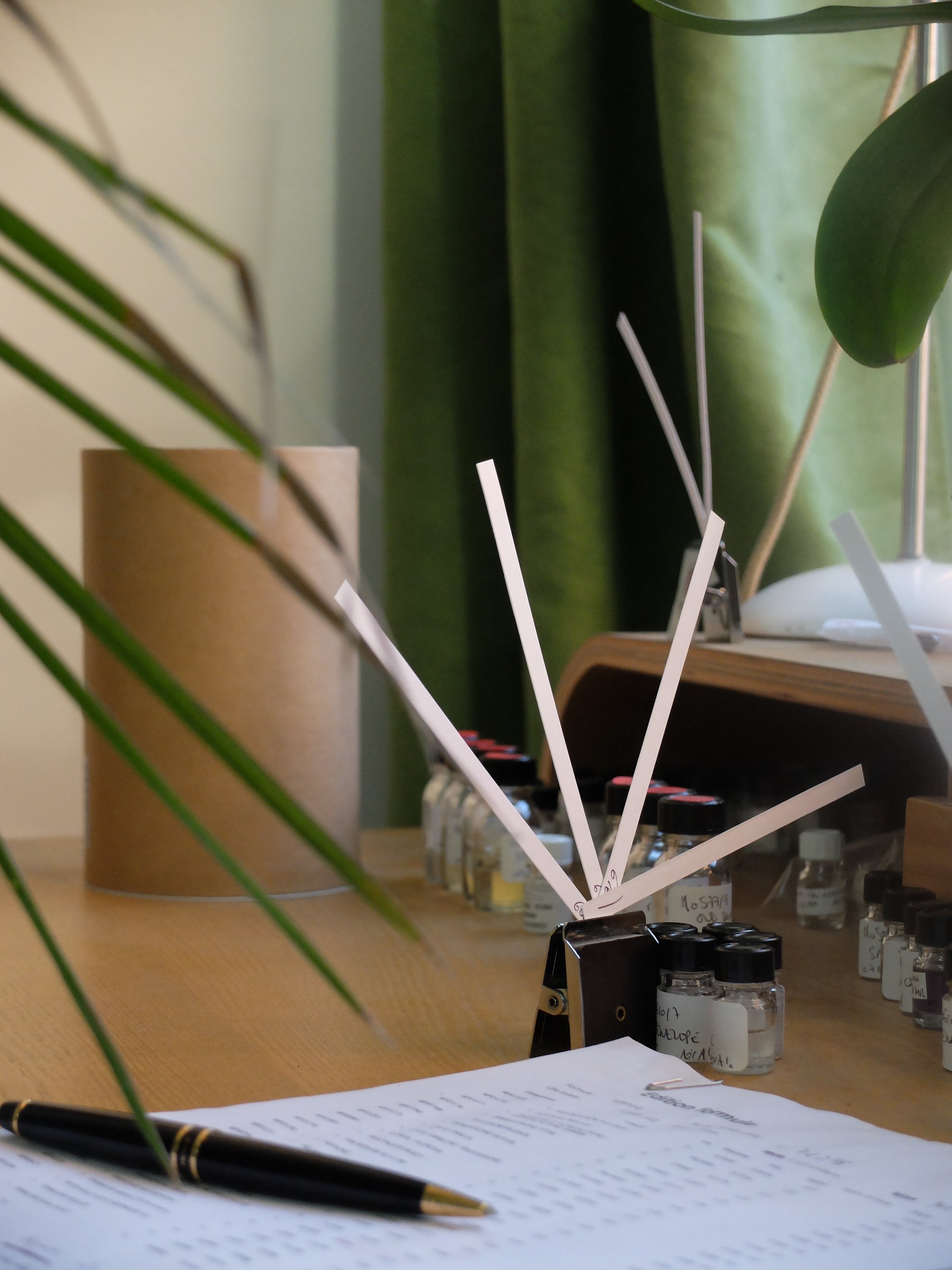
Image from Karine’s studio
Someone I knew from Haarmann & Reimer suggested that I study luxury management. His son was doing a master’s degree and really enjoying it, so I decided to try. Part of the course involved six months at Guerlain. I thought perhaps I could build a career working for luxury brands, but I soon realised how much I missed the laboratory, the raw materials, and creating.
Eventually, a company in Grasse hired me to develop its business in Paris. I had to find clients and create their perfumes, but I didn’t have a laboratory. I wrote formulas in Excel and emailed them to Grasse. They weighed them, and once a week I received a package of trials to smell and correct. I did that for four years.
It was frustrating to work without direct access to the materials, and I became very depressed.
Then my husband and I had a car accident. The person who came to help told us we were very lucky to have survived. When I got out of the car, I said to my husband, “Okay, I’m going to start my company. We only have one life, so I’m doing it.”
Have you ever regretted that decision?
No. As you get older, you begin to understand why you’ve arrived where you are. It makes sense that I work independently, because I need to be alone to compose. That’s very important to me.
I’m very independent, and I can’t stand management. When I work, I want to be efficient. In large companies, you sometimes have to keep quiet, and I can’t keep quiet!
I say I’m lazy, but I work a lot. I like to say that lazy people know how to be efficient, and when I work, I am efficient. I don’t have time to lose my time.
Is there anything you miss about working within a large fragrance company?
Yes, the resources and the opportunities. When I see the captive materials available to perfumers at companies like Givaudan, or the trips they can take to discover incense in Oman, tonka in Venezuela, or patchouli in Indonesia, of course I would love to have those experiences.
One of my former students was recently in a tuberose field in India at six in the morning. I would love to do that, but it’s something I can’t easily afford working alone.
Seeing raw materials where they grow must be so inspiring. You have the light, the people, all the smells around you. There are emotions from those experiences that you can then bring into a perfume.
How do you see the future for independent perfumers? Maybe with the rise of AI companies will value the human craft more – as a luxury?
Honestly, I’m worried about whether my way of working will remain possible. It’s connected to regulation and the direction of the market, as well as technology.
When I started in 2005, niche perfumery offered an opportunity for independent perfumers. Brands needed small quantities, sometimes five kilos at a time, and those projects were less attractive to the large fragrance companies.
Now niche has become much more important to those companies. Some brands that initially worked with independent perfumers have moved towards the large composition houses, and we’re sometimes no longer even sent the briefs.
We can still work with new, smaller brands, and that’s what we do. But we don’t have the same resources or power. I do wonder how long this way of working can continue.
When you work with a brand, what do you need from them to create a perfume? Do you push back sometimes if you see the direction going the wrong way?
I need a story. The more a brand gives us a story, the more material we have to create something.
Sometimes people approach me because they love perfume and have a large collection. They might know the market very well. But knowing the names of raw materials or reading note pyramids doesn’t necessarily mean they know what they want to create.
They might say, “I like sandalwood,” and give me a list of notes, but there’s no story or emotion behind it. Then I have nothing to hold on to.
Twice, I’ve had to stop a project because we couldn’t understand each other. I didn’t understand what they wanted, and they didn’t understand what I was proposing.
For me, we write with smells. If I don’t have a story to tell, I don’t know what to write.
Does your own signature remain in a perfume, even when the brief takes you outside your usual style?
I really realised that with Luisant Haze [from Thomas De Monaco Parfums, - editor’s note]. I pushed the fruity notes and woody amber notes much further than I normally would. I felt that it wasn’t my usual handwriting.
But it was a lovely collaboration with Thomas. He came to my studio twice, and we finished the formula together. Then people who knew my work said, “It’s amazing, because it’s still your handwriting. It’s fruity, but it’s still fresh and luminous.”
That surprised me. For me, having someone recognise your style is one of the goals of being a perfumer.
Part of it comes from habits, from the way you combine certain raw materials. But some choices are harder to explain. That’s why I need my laboratory and why I like to work alone.
I smell in a separate room, away from the lab, in silence. Sometimes, while I’m concentrating, my brain tells me to add a particular material. I don’t know where the idea comes from. I go to the lab, dip a blotter, and think, “Yes, of course. That’s it.”
Perhaps it comes from memory or the unconscious. Whatever it is, it’s very personal.
What does a working day look like for you?
I work at home, so I have to be disciplined. I start every day at nine, usually with forty-five minutes to an hour of emails, newsletters, and seeing what’s happening in the market.
Then comes the best part of the day. I go into another room and smell.
First, I smell the raw-material blotters I dipped the day before, without looking at what they are. I have to guess. That also keeps me aware of how the materials evaporate. If I’m hesitating between two fruity notes, for example, I can dip both and compare what’s left the following day.
Then I smell the drydowns of the formulas I worked on the previous day and make corrections. After that, I dip fresh blotters to assess the opening and the rest of the composition.
I enter the changes on the computer, answer more emails, or take calls. In the afternoon, I weigh my formulas. I usually leave them to rest a little before making the samples in alcohol. Then there are invoices and administrative tasks to do as well.
Is there one perfume you’ve created that feels especially personal?
Lime Absolue. It was released quite a long time ago, through a project by François Duquesne. He approached perfumers and asked, “What do you have on your shelf that you really like, but have never sold?”
I gave him Lime Absolue, which was very personal to me for different reasons. He loved it and chose it for the project.
Do you wear perfume yourself?
Yes. There’s one perfume I made that I wear, but it has never been released. My girlfriends always ask for samples because they love it, but no brand has bought it!
Otherwise, I wore Guerlain’s Vétiver for around thirty years. It has changed quite a lot over time, so I sometimes wear other things now. I enjoy Mark Buxton’s Emotional Drop, and I also sometimes wear Bois Impérial, which I think is very good.
You also teach. Is there anything you deliberately do differently from the way you were taught?
Today, I mainly teach students how to smell. But when I was teaching creation, it was very important to me to smell alongside them.
They would have a perfume to work towards, and I would have prepared a simplified formula. They had to try to match the sample. I wanted to smell their trials with them and say, “Can you smell that this material is too high? Can you see that there’s too much vanilla?”
When I was a student, teachers would sometimes look at our formulas and tell us to add more of something, but they wouldn’t smell with us. I think students can get lost that way.
At that stage of learning, you need to smell together and understand what “too much” actually smells like. Of course, we compose with our brains too, but we need that experience with our noses.
What do you enjoy most about working with students? Do they ever make you smell things differently?
They give you so much energy. I find young people today incredibly interesting and mature. When I entered perfume school at twenty, I was the youngest in the class, and I felt like a baby!
It’s wonderful to smell familiar raw materials with them. You think you know a material because you smell it every day. But when you listen to their reactions, you discover other things.
Smell is connected to memory, and we don’t have the same memories. They grew up eating different sweets and using different pens and paper at school. Their references are different from mine.
They notice things in raw materials that I hadn’t noticed before. Without realising it, they give me ideas. That’s very precious.
I’m also so proud of my former students who have become perfumers. Some were already so brilliant at school. Seeing what they’ve gone on to do makes me feel that I’ve done something good in my life.
Finally, is there a smell you would still love to capture?
There’s something I call “the cat smell.” When I say that, I know exactly what I mean, but it isn’t the smell of my cat!
It’s a smell I sometimes notice on people, women or men, usually with brown hair. I find it beautiful. It has a kind of velvety quality.
A few weeks ago, I was going to a work event with a friend I’ve known since perfume school. We met in the metro, and when I kissed her hello, I said, “You have the cat smell!” It was the first time I’d noticed it on her in thirty years.
I would love to capture that smell. I feel a little like Jean-Baptiste Grenouille! But I’ve never tried, and I’m not sure I could put it in a bottle. I don’t even know whether other people would like it. I just know that I love it.
Thank you for your time.