Written by Kristina Kybartaite-Damule
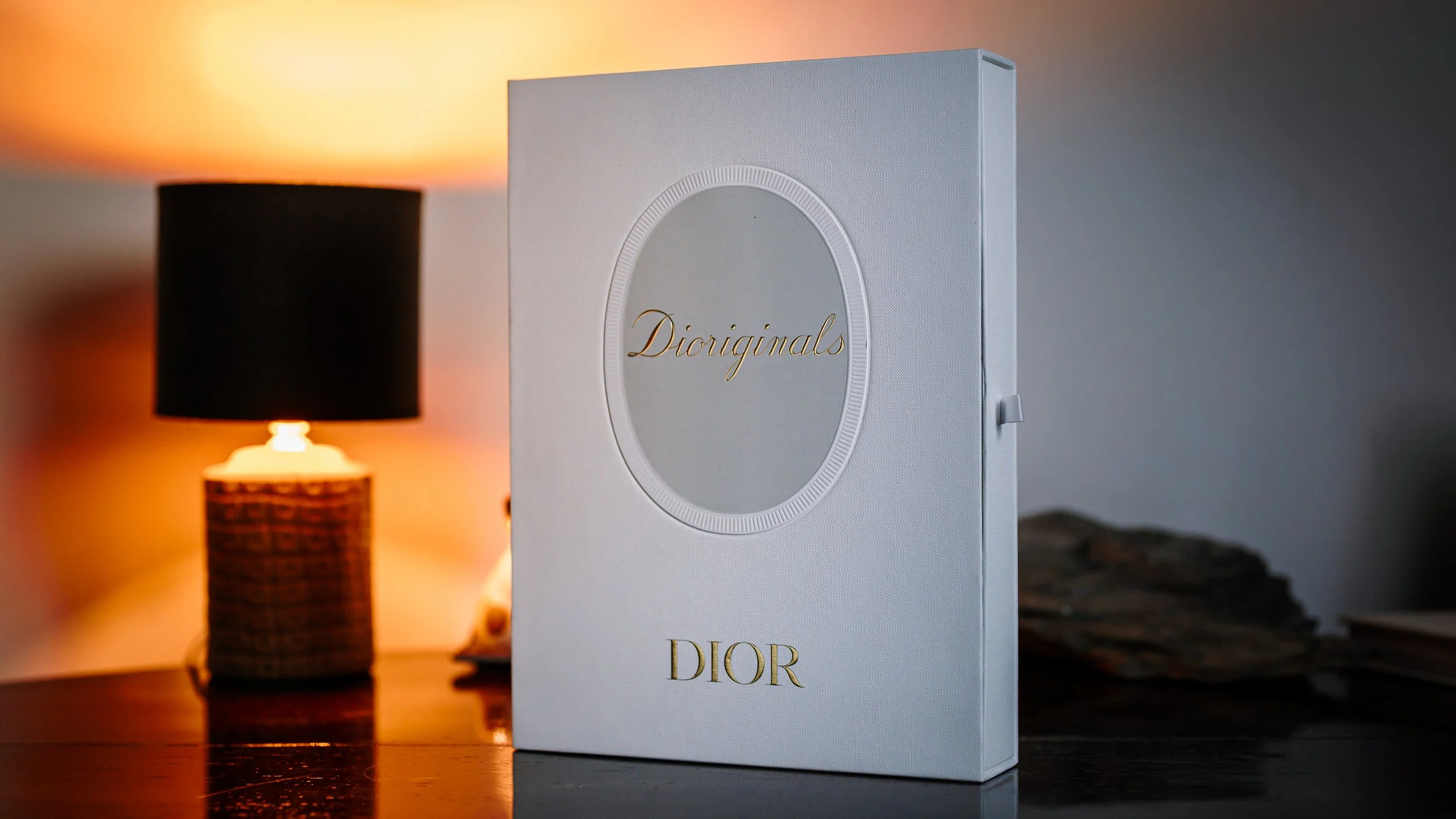
A perfume may keep its name for decades, but that does not necessarily mean it still smells the way its creator originally intended. Changes in regulations, the availability of raw materials, and even the quality of ingredients can gradually transform a composition. With its new Dioriginals collection, Dior has decided to look back at its olfactory heritage, restoring 13 historic fragrances with the ambition of bringing them closer to their original character.
Images: Instagram / @kristinakii.scents
The project, led by Dior's perfumer Francis Kurkdjian, took four years to complete. Rather than creating modern interpretations of familiar perfumes, Kurkdjian returned to the archives, studying original formulas and exploring how contemporary materials and technologies could help recreate the fragrances as faithfully as possible.
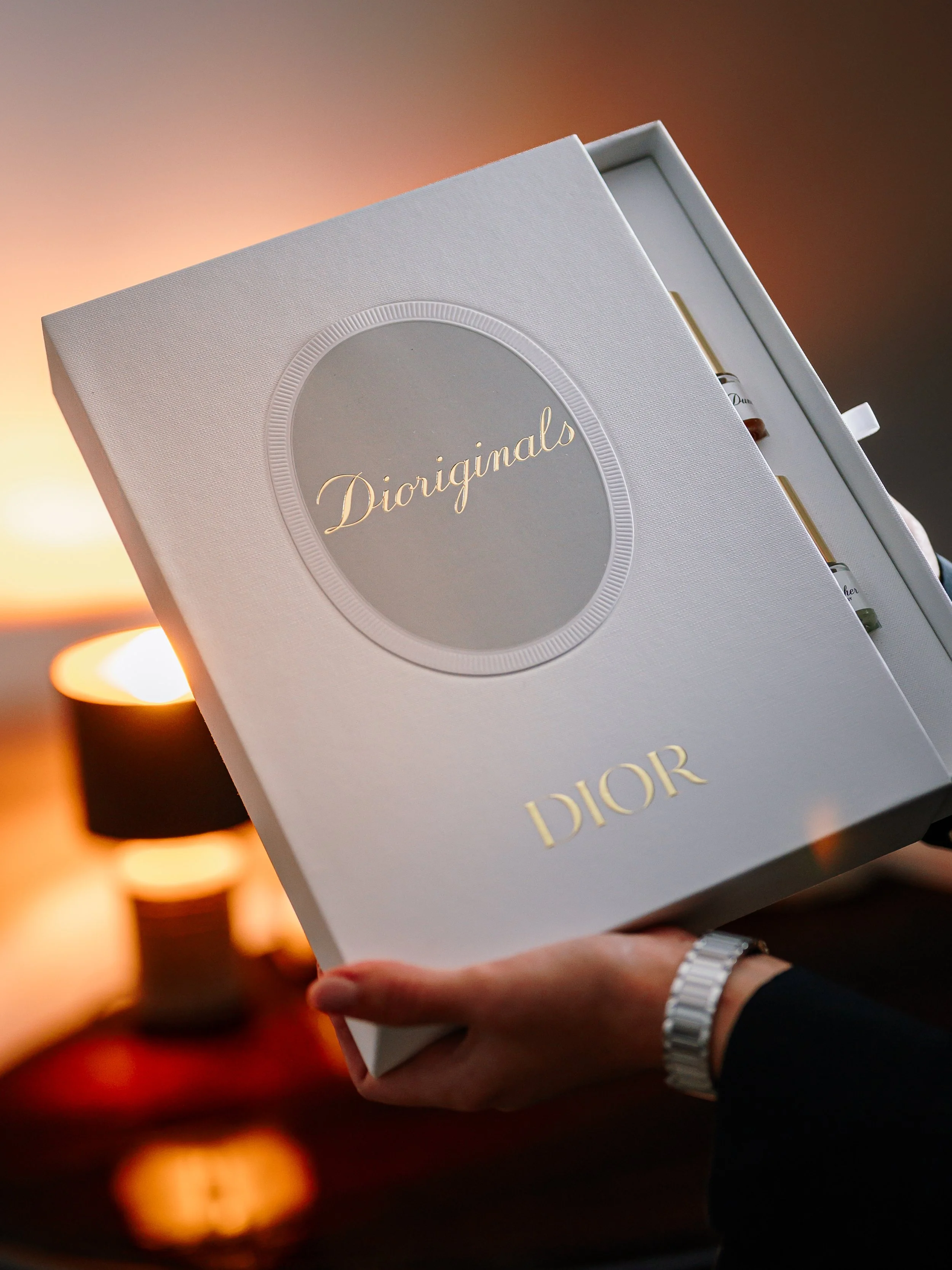
And this goes beyond the scents themselves. For Dioriginals, Dior has revived its historical Oval bottle, first introduced in 1948 by Serge Heftler-Louiche, co-founder and first director of Parfums Christian Dior. The new interpretation preserves the historical design while introducing contemporary details, including a textured label and a metal collar engraved with the CD monogram.
I find this approach very interesting: preserving the artistic identity of fragrances that represent almost eight decades of Dior's history and have helped shape perfumery as we know it today.
Kurkdjian compared the restoration of perfumes to the restoration of works of art, such as paintings. However, olfactory restoration can be even more complicated because, unlike a painting or a piece of jewellery, a perfume's original form can not always be reproduced using precisely the same materials.
Some ingredients that were once essential to perfumery are now restricted or prohibited, others have become difficult to source, while natural materials can change depending on their origin, harvest conditions, or extraction methods.
For this reason, I was very excited when I first learned about the project and even more excited when I was sent a PR kit with the samples of all 13 perfumes . As a perfume nerd, getting even a glimpse of a history I never had the chance to experience brings me genuine joy.
Of course, I would be lying if I told you that I could judge the accuracy of these reconstructions. I have never properly tested the original formulations. However, this also allowed me to approach the collection without nostalgia (almost), but with genuine enthusiasm nevertheless, discovering nearly 80 years of perfume history.
The Perfumes
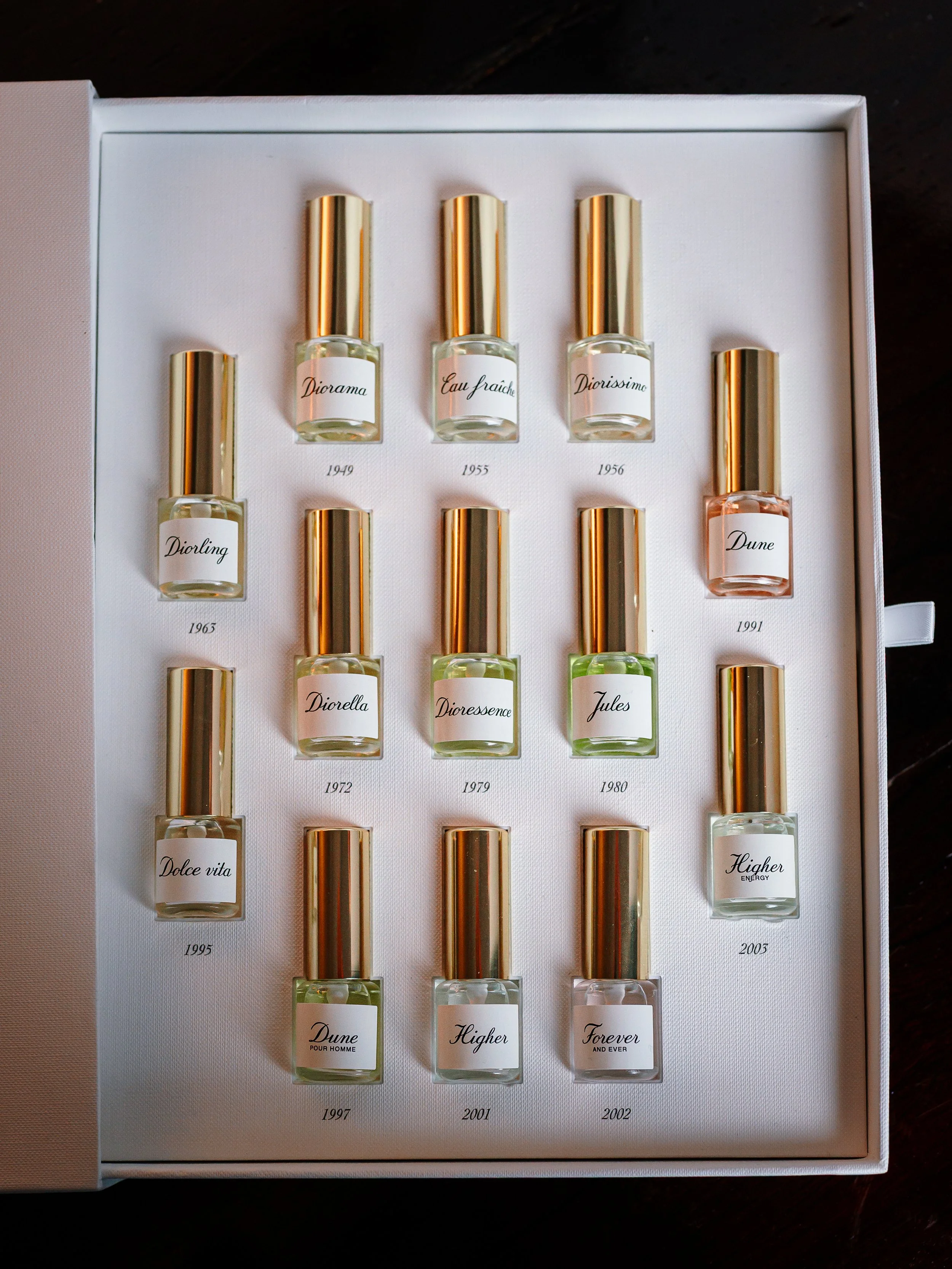
The Dioriginals collection comprises 13 perfumes, offering a kaleidoscopic look at how fragrances and tastes have changed over the decades, with the introduction of new materials, changing cultural influences, and the evolution of modern olfactory aesthetics.
Diorama (1949). Originally created by one of the most influential perfumers of the 20th century, Edmond Roudnitska, this was Dior's second perfume, after Miss Dior. Diorama is a sophisticated floral chypre, with a focus on jasmine and oakmoss. To me, it smells very classy, and I think it remains relevant even more than 75 years after its creation.
Eau Fraîche (1955). Built around luminous citrus and aromatic notes, Eau Fraîche was an important step in developing a lighter, fresher approach to perfumery. It was also reportedly Christian Dior's own fragrance. Lemon, lavender, vetiver – these notes still form the backbone of many colognes today. In this perfume, they are highlighted to the fullest, offering a burst of energising freshness.
Diorissimo (1956). This perfume is one of the most important creations not only in Dior's history but also in the history of perfumery. It was a groundbreaking interpretation of the scent of freshly picked lily of the valley, which was also Christian Dior's favourite flower. Since the flower does not give a usable essential oil, Roudnitska had to put all his mastery and creativity into developing this composition. When I was growing up, my grandmother used to grow lilies of the valley in her garden, and I loved smelling these flowers. So the scent of Diorissimo feels very familiar to me.
Diorling (1963). Originally created by Paul Vacher, the perfumer behind the original Miss Dior, this perfume has also been called 'Miss Dior in a leather jacket'. It is a floral chypre with a leather twist that was rather rebellious for its time. The galbanum seems to contrast sharply with the jasmine, yet the composition still smells elegant. It makes me imagine a refined lady who knows her worth and owns the room before even entering it.
Diorella (1972). Another creation by Roudnitska, conceived as a feminine counterpart to Eau Sauvage. Its floral chypre composition combines cumin, aromatic freshness and floral notes with a fruity, peachy base. It is a complex fragrance inspired by the spirit of liberation of the 1970s. The cumin gives it a slightly animalic character, and I can see how it might be challenging for some. But I think it also brings a lot of personality to this perfume.
Dioressence (1979). Originally composed by Max Gavarry, Dioressence continues the chypre tradition but explores a richer, spicier and more sensual direction. It was even considered provocative at the time! The scent combines florals, spices and warm base notes, such as benzoin, reflecting the more opulent side of perfumery. It smells green, very soapy and undeniably vintage.
Jules (1980). With this scent, originally created by Jean Martel, we enter the world of classic masculine fragrances of Dioriginals collection. An aromatic, woody fougère with animalic and leathery touches, it was a rather polarising creation at the time of its launch. Kurkdjian's version smells fresh, clean and like a very traditional gentleman's fragrance, while still retaining that well-balanced animalic touch, especially in the opening.
Dune (1991). One of my absolute favourites from the collection, created by Jean-Louis Sieuzac and Dominique Ropion. The fragrance took inspiration from the atmosphere of a seaside garden, combining citrus, floral and ambery elements. And while it smells fresh, it is not an aquatic scent. The base is rather warm and woody, making me think of a pine forest near the dunes rather than the sea itself. And the seaside I imagine is the cold Baltic Sea, with the fabulous dunes of Nida. This might not have been the original inspiration for the perfume, but this is where it takes me.
Dolce Vita (1995). Another favourite of mine, and here I can already find a hint of nostalgia. I feel that its scent is familiar from my early childhood, even though I don't believe anyone in my close family wore Dolce Vita. Somehow, it embodies the playful scents of the 1990s – the fruits, bright florals and sweet vanilla. Composed by Pierre Bourdon, this perfume presented another interpretation of femininity, and I find it still relevant today.
Dune pour Homme (1997). Created by Olivier Cresp, this perfume explores the original Dune inspiration from a different perspective. Green, citrusy and woody, it places the emphasis on fig. And while, like the feminine version of Dune, it is also supposed to evoke the seaside, I find it more warm and Mediterranean. It's simple, fresh and radiant.
Higher (2001). Originally created by Olivier Gillotin and Olivier Pescheux, this scent instantly caught my attention. It was meant to be energetic, reflecting the urban spirit of the early 2000s. And well, this is exactly what it does. In fact, I feel that this fresh, aromatic woody scent inspired many masculine fragrances that followed, as its character feels so familiar. Growing up in the 2000s, this was exactly what I associated with the scent of a man. And honestly, I still like it a lot and wouldn't mind my husband wearing it.
Forever and Ever (2002). Created by Jean-Pierre Béthouart, this perfume takes a softer direction. Its delicate floral character centres on rose and almond blossom, the latter recreated through an imagined perfumer's accord. The florals are enveloped in a weightless dusting of musk, and the result smells light, clean and really modern.
Higher Energy (2003). Originally created by Nathalie Gracia-Cetto and Carlos Viñals, this is a classic fresh masculine perfume, meant to reflect the energy of a neon-lit city at night. Grapefruit, juniper, spices and woody notes create exactly that impression. It smells clean and, again, very suitable for today's man. I would say it feels younger than the original Higher.
Why Preserving Perfume History Matters
Dioriginals brings historically important compositions back into contemporary perfumery, drawing attention to legendary perfumers and reminding us that perfume history deserves to be experienced through scent, not only through books.
Of course, these perfumes are reconstructions, not untouched bottles from the past. And those who grew up with these scents might be better placed to judge how accurately Kurkdjian has recreated them. However, I believe the value of such a project also lies in its broader ambition.
With thousands of new perfumes entering the market every year, we have developed a constant hunger for novelty. But sometimes, looking backwards can be equally meaningful, especially when it involves recognising the creative work of perfumers whose ideas continue to influence fragrance today.
For me, Dioriginals was not simply an introduction to 13 perfumes, but an opportunity to discover how the ideas, creativity and changing tastes of previous generations continue to shape the fragrances we wear now.