Sensory Returns. Chapter 3: Georgia – The Scent of Home
Written by Domenico Arcella
As early as 1947, during a journey through the Soviet Union, the American writer John Steinbeck wrote that Georgia was the place where all Russians hoped to go instead of paradise. It is a curious quotation, yet one rich in meaning. By definition, paradise is an ideal and unattainable place; with characteristic irony, Steinbeck suggested that, for many Soviet citizens, that ideal place had a very real name and a precise geographical location: Georgia.
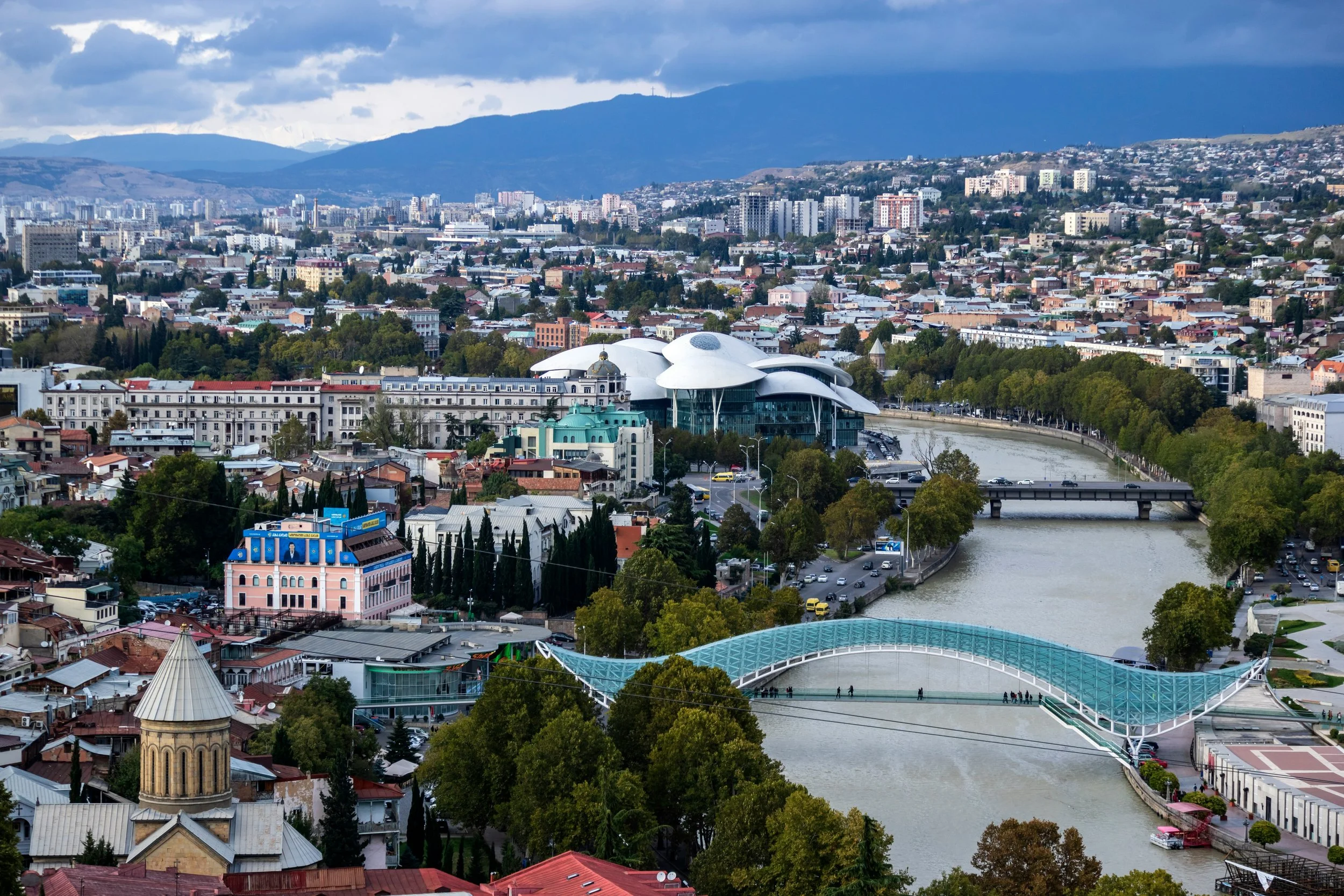
Tbilisi / Photo credit: Mostafa Meraji / Unsplash
Each city carries its own unique scent. Each scent stirs a memory. And each memory leads us back to who we are.
In this column, I want to try to tell the stories of the places I’ve traveled through, lived and loved—those that have left an indelible mark on my own story. I follow the feelings and memories that surface in me in that very moment. There is no fixed plan or schedule: only olfactory memory, and the guidance of heart and skin, leading my steps.
————
I could not agree more with this old-fashioned postcard of Georgia, which is also the homeland of part of my family; undoubtedly, it is one of the places that has contributed most to shaping my sensory imagination, especially my sense of smell.
I was only four years old the first time I went to Samtredia, the hometown of my maternal grandparents. A small town in the Imereti region, in western Georgia: a city of around 25,000 inhabitants in the heart of the plains that legend identifies with ancient Colchis and the Golden Fleece.
I do not remember the first building in Samtredia. I remember the smell.
The humid air of the plains, the wet grass, the mud, the leaves. Before seeing Georgia, I had already breathed it in. You can easily forget a station, a street, even a monument. But the smell that greets you when you arrive in a place for the first time tends to remain hidden somewhere in the back of your mind, ready to resurface years later.
Baie 19 by Le Labo, with its earthy notes, evokes for me the smell of petrichor. I immediately associate it with the memory of wet earth in the countryside of Imereti, with that rainy May when I first arrived in Samtredia.

I spent several summers, after finishing school, and a few Christmases between my grandparents’ home, Tbilisi, and the mountain house in Bakhmaro. Among the memories that resurface most often is the smell of breakfast.
The freshly baked kada, the smell of caffelatte, the chatter and laughter of my mother, my grandmother, and my aunts are among the most precious memories I keep. Sitting at the table with my siblings and cousins, still half-asleep, I feel that familiar warmth that I miss today but that continues to stay with me and comfort me, bringing me back to the carefree days of my childhood.
Lait de Biscuit by Chabaud brings me back to that feeling of warmth and home, to that very moment: breakfast with my family. It is not only the sweetness of freshly baked kada, but also, in a metaphorical sense, the sweetness of my grandmother and the quiet satisfaction I saw in her eyes as she looked at all of us gathered under the same roof.

Bianco Latte by Giardini di Toscana — now an icon of niche perfumery — translates those comforting scents into a more abstract and enveloping form.

From Tbilisi, I remember the mornings spent with my grandmother at the Dezerter Bazaar, one of the moments I looked forward to most. A riot of colors, scents, smells, and voices: a true sensory ecstasy.
From an olfactory point of view, the most vivid memory is the spice and seasoning stall. Khmeli suneli, Svaneti salt, kinza, Imeretian saffron: it was impossible not to be struck and marked by such a rich world of natural aromas.
1888 by Casamorati, especially in its opening notes, reminds me of that mosaic of aromas and immediately brings me back to one of the most tender moments of my childhood — a memory that still surfaces today, always accompanied by a smile.

And we cannot speak about Georgia without mentioning the wine season, which lasts from spring to autumn. I was lucky enough to get to know Kakheti, the most famous wine-producing region of Georgia, during the most significant moments of this cycle.
During spring, between April and May, the vineyards turn a brilliant green and the most historic wineries open their doors. It is the ideal time to taste Georgian wines alongside some of the most representative dishes of the tradition, such as chakapuli: a meat stew with spring onions, sour plums, green peppers, and aromatic herbs, cooked in dry white wine, usually Mtsvane or Rkatsiteli.
The acidity of the wine, the richness of the meat, the freshness of the herbs, and the tartness of the unripe plums all come together in a delicate balance of aromas and flavors that I still associate with the springs I spent in Kakheti.
L’Ombre dans l’Eau by Diptyque, with the vegetal green of blackcurrant leaves, the fruity and tangy accents of currants, and the floral intensity of the rose, creates in my mind a vivid snapshot of those springs in the heart of the Caucasus.

But it is between September and October that the valleys of Kakheti come alive with the grape harvest, known throughout the country as Rtveli: the most evocative moment to immerse oneself in Georgia’s oldest winemaking tradition.
In the streets of towns and villages, the scent of freshly harvested grapes and must fermenting in qvevri spreads through the air. Women prepare the traditional churchkhela, a sweet made from grape must and dried fruit, which not only fills the air with an unmistakable sweetness but also colors the landscape with long strings of walnuts and hazelnuts left to dry outdoors.
Red Wine Brown Sugar by Bohoboco combines the rich notes of red wine with the sweet, enveloping tones of brown sugar and caramel, and for a moment it feels as though I am walking through the streets of the village of Napareuli at the beginning of autumn, where wine is memory, identity, and ritual.

And then there are the summers spent in Batumi. The salty breeze of the Black Sea blends with the scent of magnolias and acacias in the surrounding gardens, creating a fragrance that I still associate with that city today. I remember long walks along the seaside promenade at sunset, running on the beach before heading back home to have dinner in the garden, while the air was filled with the smell of grilled meat, cheese, cured meats, and wine. And then, exhausted, I would fall asleep in my father’s arms, carrying into sleep all the olfactory traces of that day: the sea, the flowers, the smoke of the grill, and the warmth of the evening.

Un Jardin sous la Mer by Hermès encloses the essence of those summers, when the sea, the gardens, and the light seemed to merge into a single sensory experience. Torino25 by Xerjoff, on the other hand, carries the reassuring scent of my father’s embrace. Each time I smell it, that feeling of absolute, complete peace resurfaces in my mind: me as a child, falling asleep in his arms after a long summer day. It is one of those memories I would return to endlessly.

Looking back on Georgia, I realize that the places have begun to blur into one another. What has remained vivid are their scents. It is they that have preserved my childhood, my family, and the sense of belonging that I still carry with me today. Perhaps this is the power of smell: it does not simply take us back to a place, but to the person we were when we first breathed it in.
სურნელს გზა ყოველთვის სახლში მიჰყავს.
——————
Related articles: